Core service
Best Flooring for Florida Slab Homes: Moisture Testing Before You Buy

By Jimmie Wilson, owner of JW Painting & Pressure Washing & Epoxy Flooring
More than 30 years of hands-on painting and finishing experience
Published · Updated
- 5.0 on Google · 82 reviews
- Based in Jacksonville, FL 32254
- Where Precision Meets Perfection
Short answer
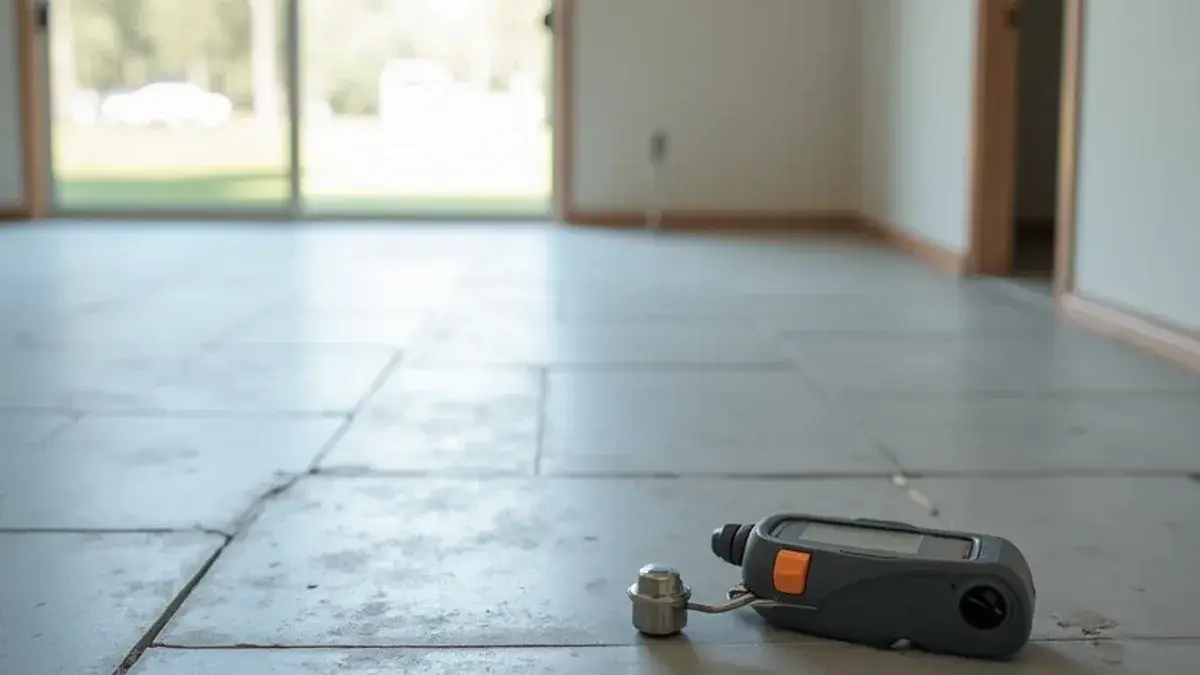
No single floor is best on every Florida slab. Porcelain tile, luxury vinyl plank, engineered wood and coatings can all work, but each product sets its own moisture limit. Test the slab first, with ASTM F2170 in-situ probes or an F1869 calcium chloride kit, then pick a floor rated for the number you get.
The slab is the part of your floor you never see, and it decides whether the part you do see lasts. Before you fall for a plank or a tile in the showroom, find out what the concrete under your house is doing. This guide explains the two standard moisture tests, which floors handle which readings, and what to check before you spend money.
Why does a slab that looks dry ruin new floors?
Concrete never fully stops breathing. The ASTM calcium chloride standard says plainly that all concrete subfloors emit some moisture as vapor. In a climate like ours, that vapor has plenty of help. Jacksonville averages about 76% relative humidity across the year and about 89% at 7 a.m., according to long-term data from the World Data Center for Meteorology.
A slab can feel dry to your hand and still carry a lot of water a couple of inches down. Once a new floor covers it, the vapor has nowhere to go. ASTM F2170 lists what happens next: adhesives let go, planks peak, finishes break down and mold or mildew can grow underneath.
The fix is not a better floor. It is knowing the number before you choose.
How do the two slab moisture tests work?
ASTM publishes two common methods for concrete. They measure different things, so a reading from one cannot be swapped for the other.
| ASTM F2170 (in-situ RH) | ASTM F1869 (calcium chloride) | |
|---|---|---|
| What it measures | Relative humidity inside the slab, read from probes set in drilled holes | Moisture vapor leaving the surface, caught by a dish of calcium chloride under a sealed dome |
| How it reports | Percent relative humidity | Pounds of vapor per 1,000 sq ft over 24 hours |
| What it reflects | The slab at the time and spots tested | The slab at the time of the test; may not predict future conditions |
| Where it does not apply | Results are only as good as the conditioning before the test | Not for lightweight or gypsum concrete |
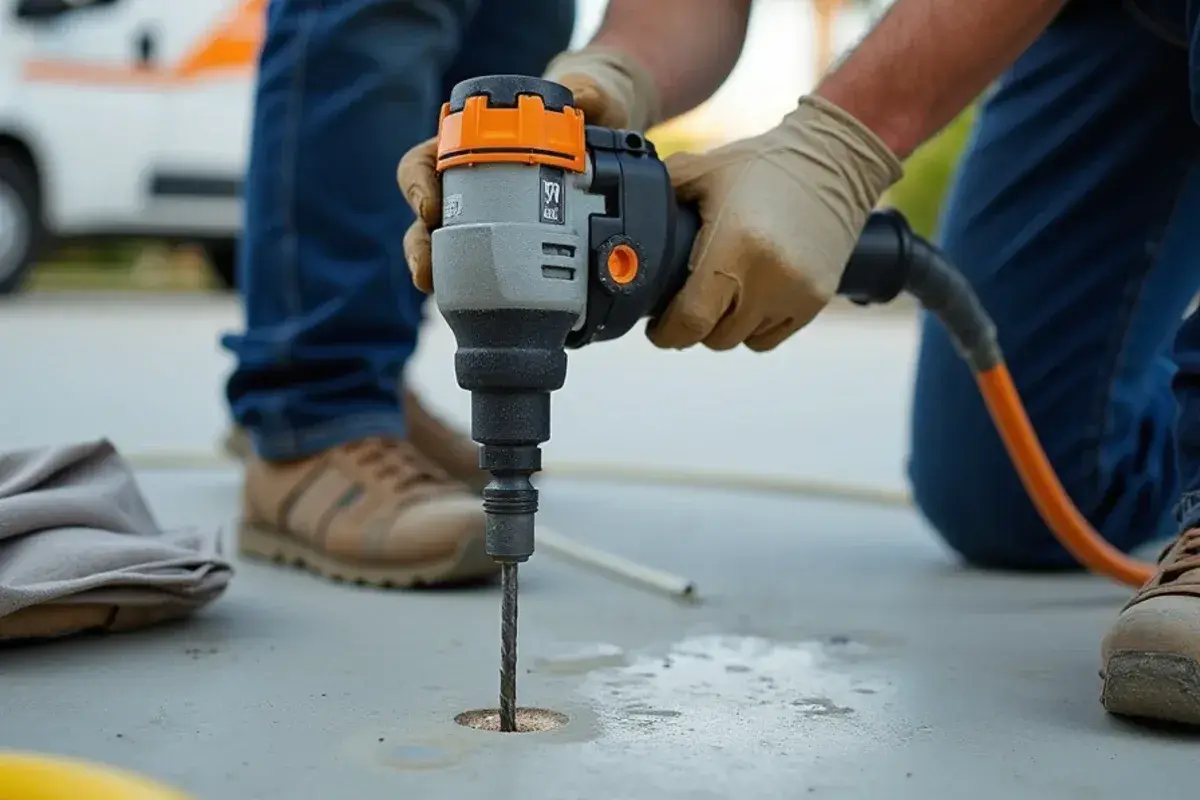
Each flooring maker's installation guide names the test it accepts, so check before anyone drills. The in-situ method looks inside the slab rather than at its top skin. A meter maker's checklist for ASTM F2170 sums up the steps:
- Run the house at normal living temperature and humidity for at least 48 hours, slab and air both.
- Plan three test holes for the first 1,000 square feet, plus one more for each additional 1,000.
- Drill to 40% of the slab's thickness when it dries only from the top, as a slab on the ground does.
- Let each hole reach moisture equilibrium for 24 hours before taking the reading.
- Record the slab and air readings, the hole locations and the probe used.
Step one catches more homeowners than any other. A vacant house closed up with the air conditioning off will not read the way it will once you live in it.
Which floors tolerate a Florida slab best?
Every type below can succeed or fail on the same concrete. The difference is how much moisture each product's maker allows and what goes between the slab and the finish.
- Porcelain or ceramic tile. The most forgiving choice. FEMA treats tile set in thin-set with cement grout on a slab as a flood damage-resistant floor. It still needs perimeter and field movement joints under TCNA Handbook EJ171, and we use crack-isolation or uncoupling membranes on slabs with cracks. Our tile flooring installation page covers the layout.
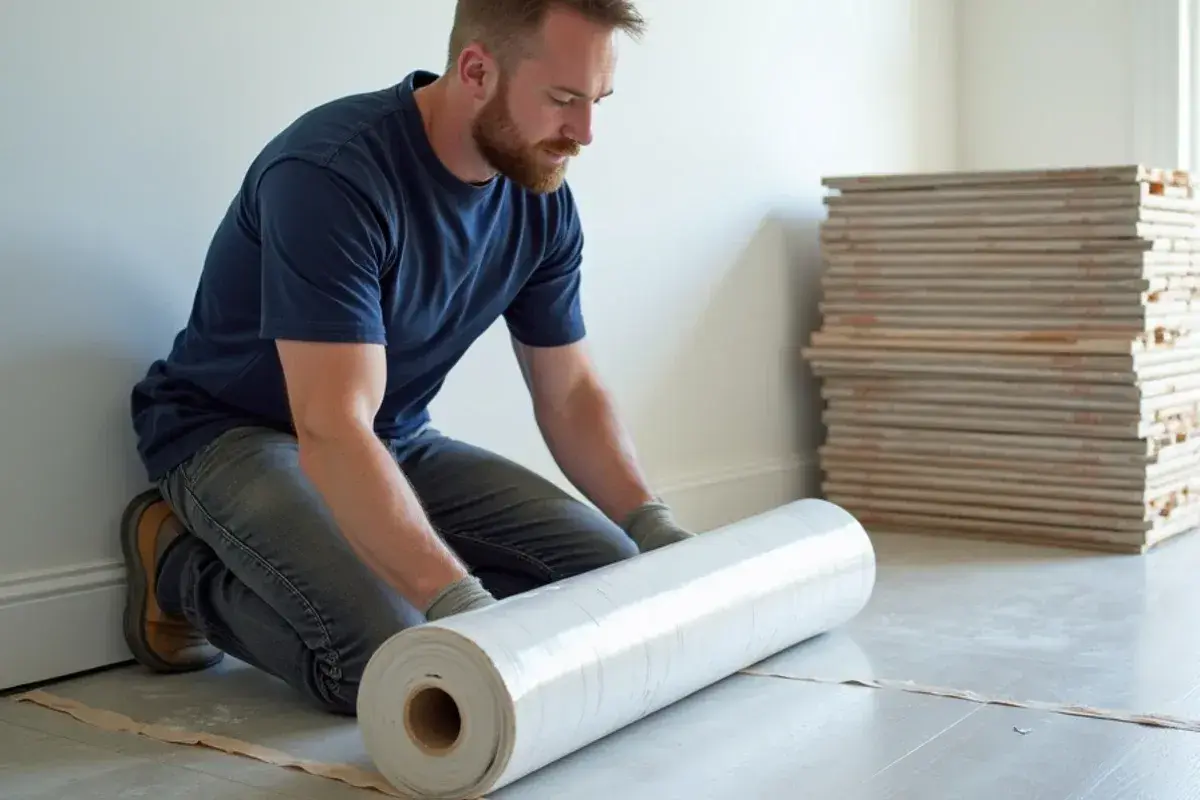
- Luxury vinyl plank. Vinyl appears on FEMA's flood damage-resistant list, and the planks ignore spills. Floating LVP still needs a moisture barrier on concrete unless the pad has one, plus the expansion gap the maker sets. See luxury vinyl plank flooring for how we lay it on slabs.
- Laminate. Looks like wood at a lower price, but its fiberboard core can swell if water sits on it. It needs a vapor-barrier underlay on concrete and a dry slab.
- Engineered wood. The National Wood Flooring Association says engineered wood moves less than solid wood with humidity. The American Hardwood Information Center calls it the better choice where moisture is a risk.
- Solid hardwood. Possible on a dry slab, but NWFA-recommended methods call for a plywood or sleeper subfloor and a vapor retarder on top of the concrete. It adds height, time and cost.
- Epoxy or other resin coatings. Bonded straight to the concrete, so moisture shows up as bubbles or peeling. Moisture-tolerant primers exist for higher readings.
Why the product's own limit beats any rule of thumb
There is no single "safe" reading for a slab. ASTM F2170 notes that flooring makers generally require moisture testing before installation on concrete, and each one publishes its own ceiling.
The spread is wide. One major laminate maker's current guide caps cement subfloors at 75% relative humidity. A coating maker rates its moisture-tolerant epoxy primer to 95% under the same F2170 test. So a slab reading of 85% could rule out one floor and suit another.
That is why "the slab is fine" means nothing until someone names the product. The installation guide also matters if you ever file a claim. That same laminate guide tells installers to measure, record and keep the moisture results. A missing record can leave you arguing about a failed floor with no data.
Before you buy: a slab checklist
Bring these questions to the showroom and to every installer who quotes the job.
Checklist
- Which moisture test will be used, F2170 probes or an F1869 kit, and how many locations?
- Will the house be at normal living conditions for 48 hours before testing?
- What is the moisture limit in the installation guide for the exact product you like?
- What goes between the slab and the floor: barrier, underlay, primer or membrane?
- How flat is the slab, and will it need grinding or a self-leveler?
- Is there any old vinyl tile or black adhesive that should be tested for asbestos first?
- How long do the planks or boxes need to acclimate in the house?
What we see on slab jobs from Blanding Boulevard to Black Creek
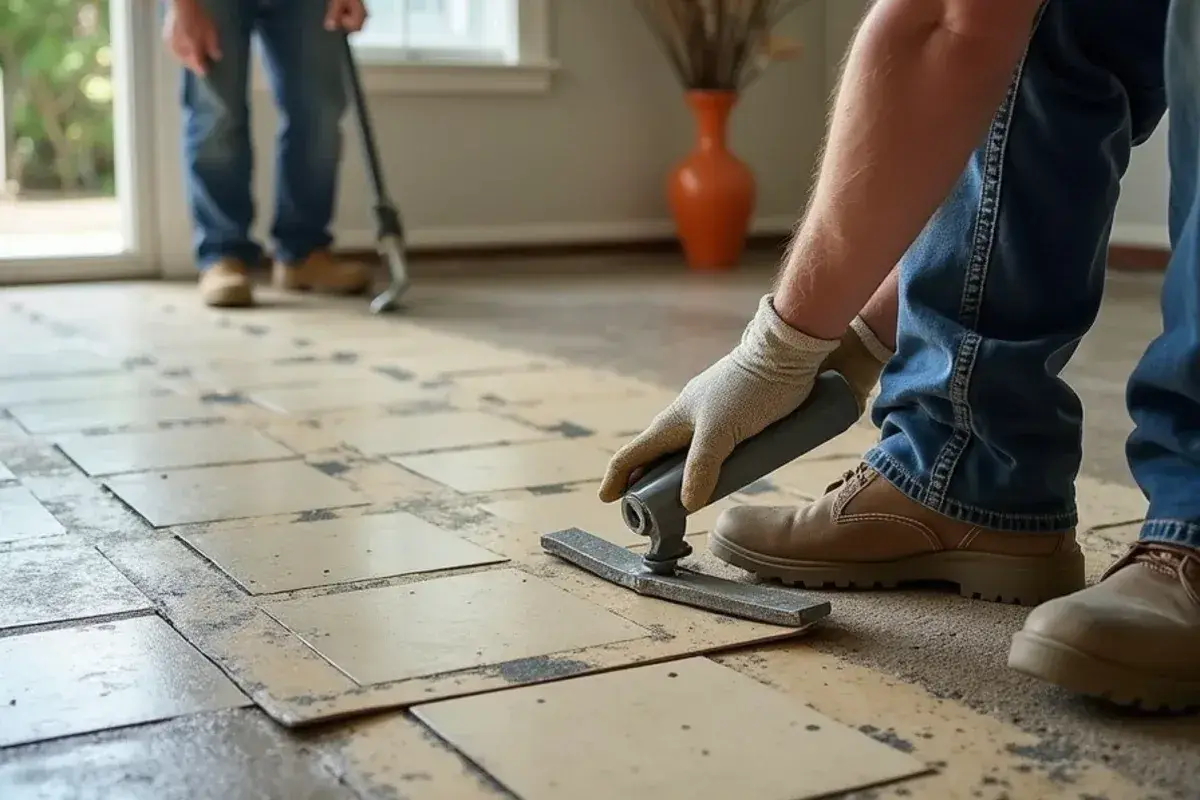
Older neighborhoods bring their own layer of history. In Bellair-Meadowbrook Terrace, many homes along Blanding Boulevard were built in the 1960s and 1970s on slabs. Pull up the carpet and you may find original vinyl composition tile or black mastic. The EPA says older vinyl tile and some adhesives may contain asbestos, so we stop and have them tested before any grinding or scraping.
Flood-soaked slabs are another story. Black Creek's record crest during Hurricane Irma put water into homes around Middleburg. A slab that sat under floodwater needs drying time and a fresh test before anything new goes down. Guessing from the calendar is how replacement floors fail a second time.
New construction has the opposite problem: water that has not left yet. The American Hardwood Information Center says slabs under 60 days old are generally too wet for flooring.
The trade-off we explain most often is time against risk. Waiting three days for in-situ readings feels slow when the movers are booked. But the alternative is choosing a floor blind and hoping the slab agrees. On our flooring installation jobs, the moisture test comes before the written quote for exactly that reason.
Frequently asked questions
Can I put LVP straight onto a concrete slab?
No, not bare. Most floating vinyl plank makers want a moisture barrier on concrete, often 6-mil polyethylene, unless the attached pad already includes one. They also set a perimeter gap and limits on run length. The plank itself shrugs off water, but vapor trapped beneath it can feed mold and lift the edges, so the slab still gets tested first.
How long does a proper slab moisture test take?
Plan on about three days for the in-situ RH method. ASTM F2170 asks for the slab and the room to sit at normal living temperature and humidity for at least 48 hours, then each drilled hole equilibrates for 24 hours before the reading. On a quote visit, that usually means one trip to set the probes and a second to read them.
Is tile the safest choice for a slab that tests high?
Yes, it is usually the most forgiving finish, though not a free pass. FEMA treats tile set in thin-set on a slab as a flood damage-resistant assembly. Still, the mortar and any membrane under the tile have their own data sheets, and tile needs movement joints at the edges. Check those sheets before assuming tile fixes a wet slab.
Do I need to test a slab that already had flooring on it?
Yes. Old flooring tells you only that the last floor survived, not what the slab reads today. Carpet breathes, while vinyl plank or sheet goods trap vapor. A leak, a flood or a long vacancy with the air conditioning off also changes the numbers. Testing after demolition is the only way to compare the slab against the new product's limit.
Test first, then choose your floor
The best floor for a Florida slab is the one rated for what your slab actually reads. Tile is the most forgiving, LVP works well over a proper barrier, and engineered wood beats solid wood where moisture is a question. Get a real test, compare the result with the product's own limit, and decide with numbers in hand.
If you want the slab tested before you buy, call (904) 533-7260. We measure, test the concrete and match the floor to the reading.
Talk to a Jacksonville floor crew
Questions about your own floor after reading this? Call (904) 533-7260 and describe what you're seeing.
JW Painting & Pressure Washing & Epoxy Flooring · Jacksonville, FL 32254 · (904) 533-7260
Mon–Sat 7am–8pm · Sun closed