Prevention
Why DIY Garage Epoxy Peels in Florida (Hot-Tire Pickup) and How to Prevent It

By Jimmie Wilson, owner of JW Painting & Pressure Washing & Epoxy Flooring
More than 30 years of hands-on painting and finishing experience
Published · Updated
- 5.0 on Google · 82 reviews
- Based in Jacksonville, FL 32254
- Where Precision Meets Perfection
Short answer
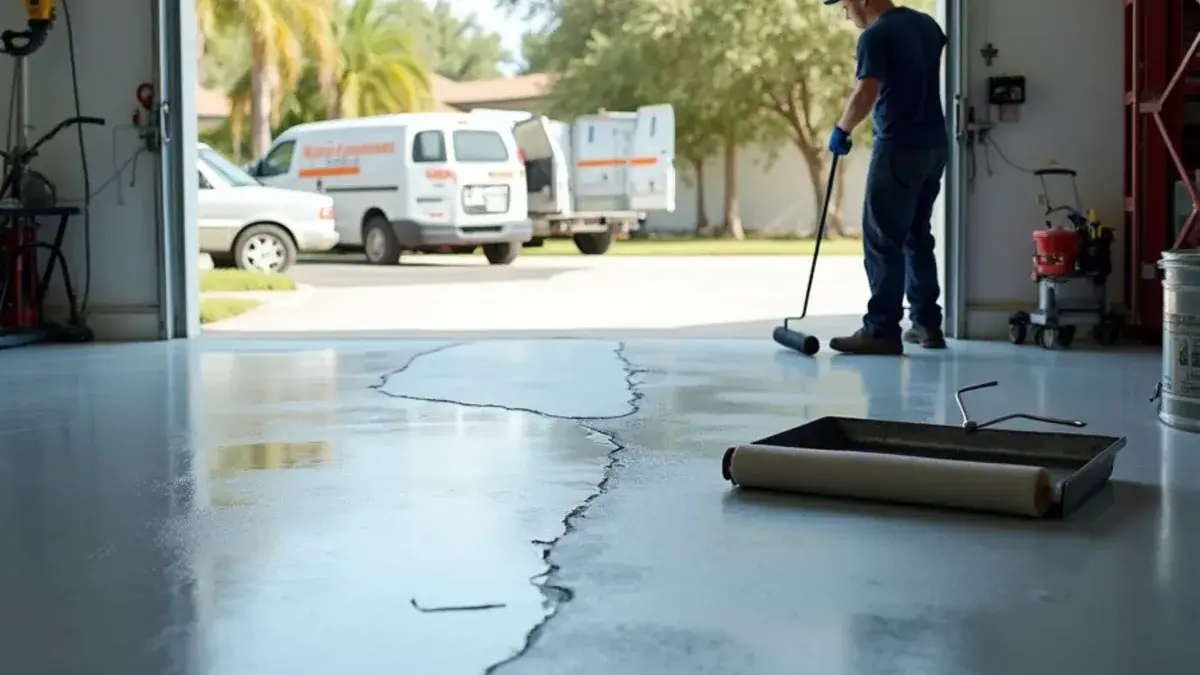
DIY garage epoxy usually peels in Florida because it never bonded well. A thin film rolled over an acid-etched or sealed slab lets hot tires pull it up. Moisture rising through the concrete, heat that shortens working time, and condensation near the dew point make it worse. Where it peels tells you which cause you have.
You rolled the coating on over a weekend, it looked great, and a few months later it is lifting where the tires sit. That story is common in Florida garages. The fix starts with reading how the floor failed, because each pattern points to a different cause.
Where is your coating peeling, and what does that mean?
Look closely before you scrape anything. The location and the underside of the peeled flakes tell you most of what you need to know.
| What you see | Likely cause | What it points to |
|---|---|---|
| Strips lifting where tires park | Hot-tire pickup | Thin film, weak bond or not fully cured when driven on |
| Sheets peeling off smooth, clean concrete | Bond failure | Not enough surface profile, or a sealer or residue under it |
| Bubbles, blisters or pinholes | Outgassing or moisture | Coated while the slab was warming, or vapor rising through the slab |
| White powder or damp spots under flakes | Slab moisture | Water vapor pushing up from below |
| Soft, tacky or cloudy patches | Cure problem | Mixed wrong, used past pot life, or condensation on the slab |
| Peeling at the garage door edge | Water and sun at the threshold | Rain blow-in, puddling and UV on the first few feet |
Hot-tire pickup gets the most blame, but it is usually the last step, not the first. Tires heated by driving soften thin or under-cured coatings, and the plasticizers they release attack the film. A fully cured, well-bonded, higher-build floor resists it. So when tire strips lift, ask why the coating was thin, weak or soft enough to let go.
Why Florida garages are hard on DIY coatings
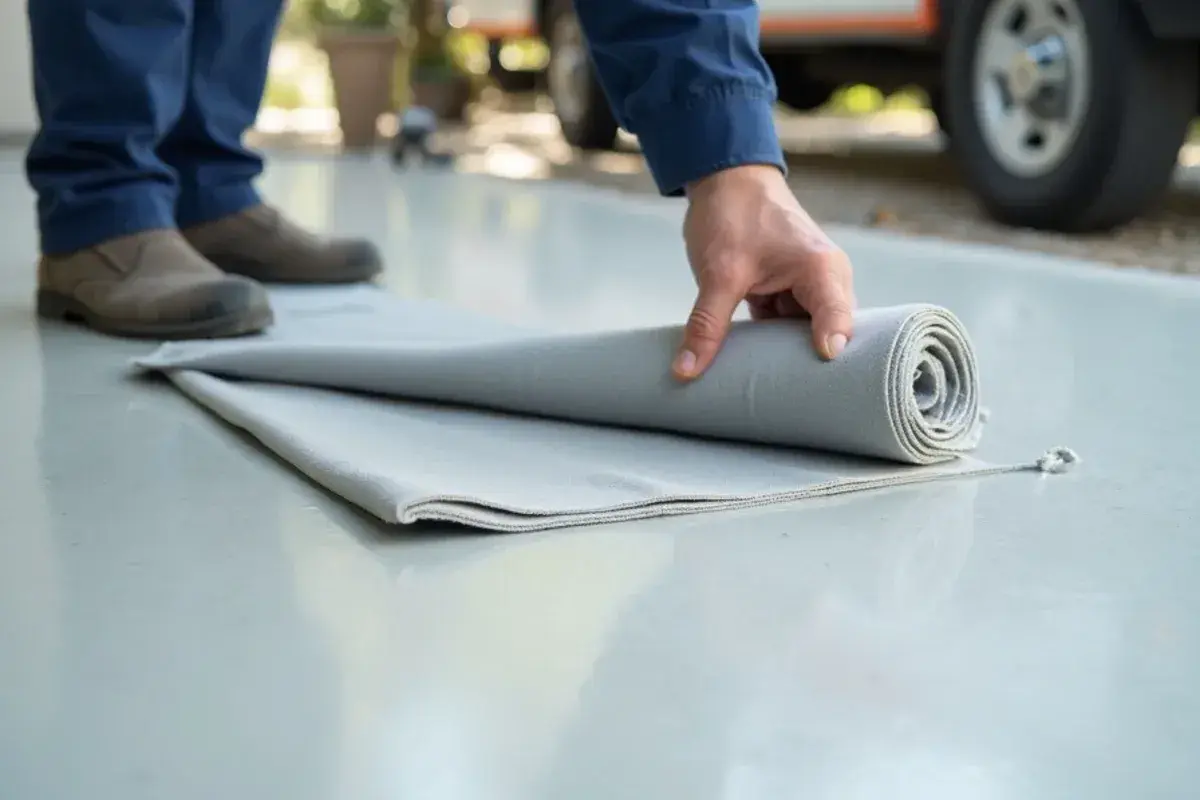
The same garage that feels like an oven in July is also one of the most humid rooms in the house. Both work against a coating that goes on at home.
Heat shortens working time. Two-part coatings start reacting the moment they are mixed. Sika's data sheet for its Sikafloor-261 epoxy lists about 40 minutes of pot life at 68°F and about 15 minutes at 86°F. Jacksonville's July normal high is near 92°F. Sika also warns, on its Sikafloor-315 N topcoat sheet, that the end of pot life is not visible. The material still looks liquid but bonds poorly.
Humidity and dew point. The same Sika epoxy sheet requires the slab to be at least 5°F above the dew point. Otherwise condensation can cause adhesion failure or a cloudy blush. Long-term climate tables put Jacksonville's early-morning humidity near 89% on average. A cool slab on a muggy morning can sit close to the dew point without looking wet.
Rising temperatures and outgassing. Sika says not to apply the epoxy while air and slab temperatures are rising, because pinholes may occur. In practice, that rules out the late-morning warm-up many DIY jobs start in.
Moisture in the slab. A slab-on-grade sits on Florida soil and can carry vapor up from below. Sika limits its epoxy to slabs reading 85% or less on an ASTM F2170 in-situ relative humidity test, which measures moisture inside the concrete.
The prep step most DIY kits skip
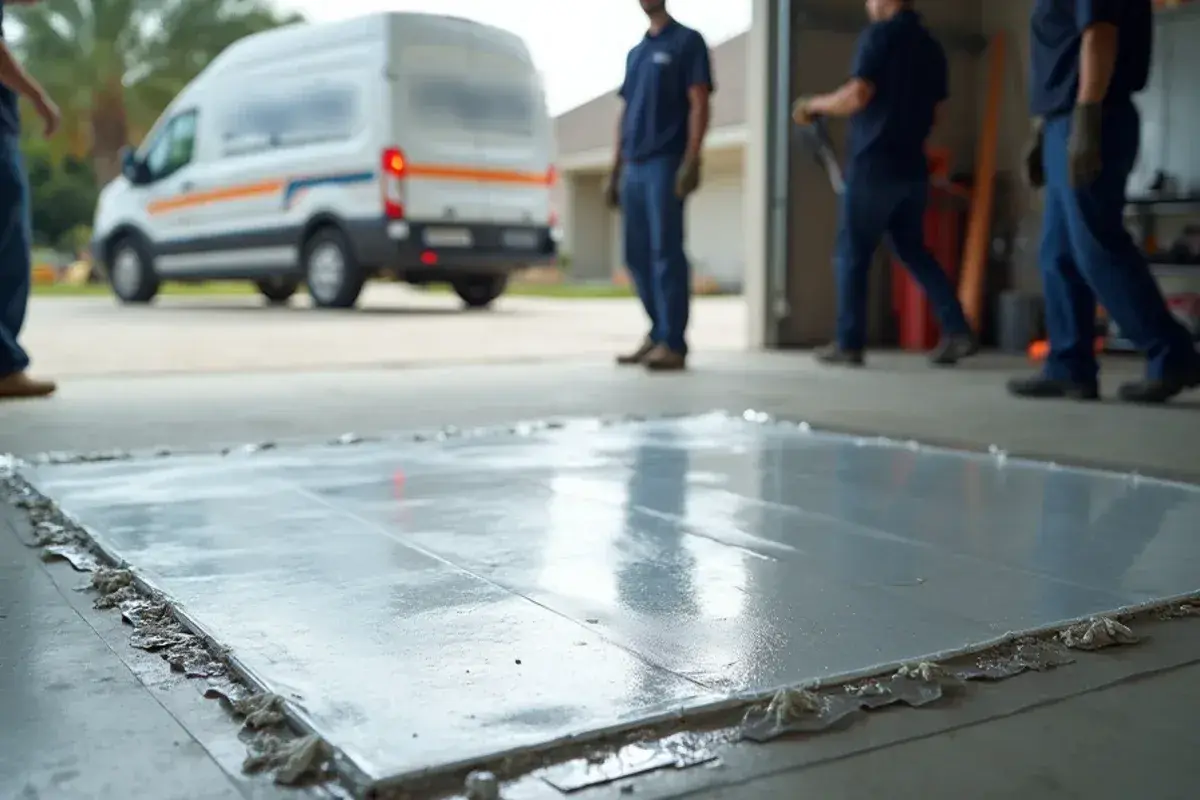
A coating grips concrete by locking into its texture. The concrete repair industry grades that texture on ICRI's concrete surface profile scale, from CSP 1 to 10. Sika specifies CSP 3 to 4, on mechanically prepared concrete, for its Sikafloor-261 floor.
Most garage kits rely on an acid or citrus etch instead. Graco's concrete prep guide describes acid etching as a way to lightly roughen a surface for a sealer, primer or other thin coating. That is the honest scope of the method. It also does nothing about a clear sealer a builder may have rolled on, and it leaves residue if it is not rinsed well.
A quick check helps before you choose. Sprinkle a little water on the bare slab. If it beads up instead of darkening the concrete, something is sealing the surface, and an etch alone will not get the coating through it.
How to keep a garage coating from peeling
If you still want to try it yourself, or you want to judge a contractor's plan, these are the steps that matter most.
Checklist
- Test for moisture first. Rust-Oleum's Moisture Stop data sheet describes taping a 2 ft by 2 ft plastic sheet down for 24 hours and checking for droplets or dark concrete
- Remove any old paint, sealer or failed coating completely before recoating
- Profile the slab by diamond grinding or shot blasting, then vacuum it clean
- Fill cracks, pits and spalls with a compatible repair material
- Check the dew point and slab temperature, and start while temperatures are steady or falling
- Mix only what you can spread well within the stated pot life
- Choose a two-part system rated for vehicle traffic, and apply it at the stated thickness
- Keep cars off until the product reaches full cure at your garage's temperature
The plastic-sheet test is only a first look. A clean result does not prove the slab is dry. Tests such as ASTM F2170 probes or the ASTM F1869 calcium chloride test give real numbers.
What we see in the field on failed garage floors
Most failed floors we look at are thin roll-on coatings over a slab that was washed or etched, not ground. Many peel first in the tire paths and then spread outward. Some lift in big, flexible sheets with bare, clean concrete underneath. That second pattern almost always means the coating sat on top of the slab and never bit in.
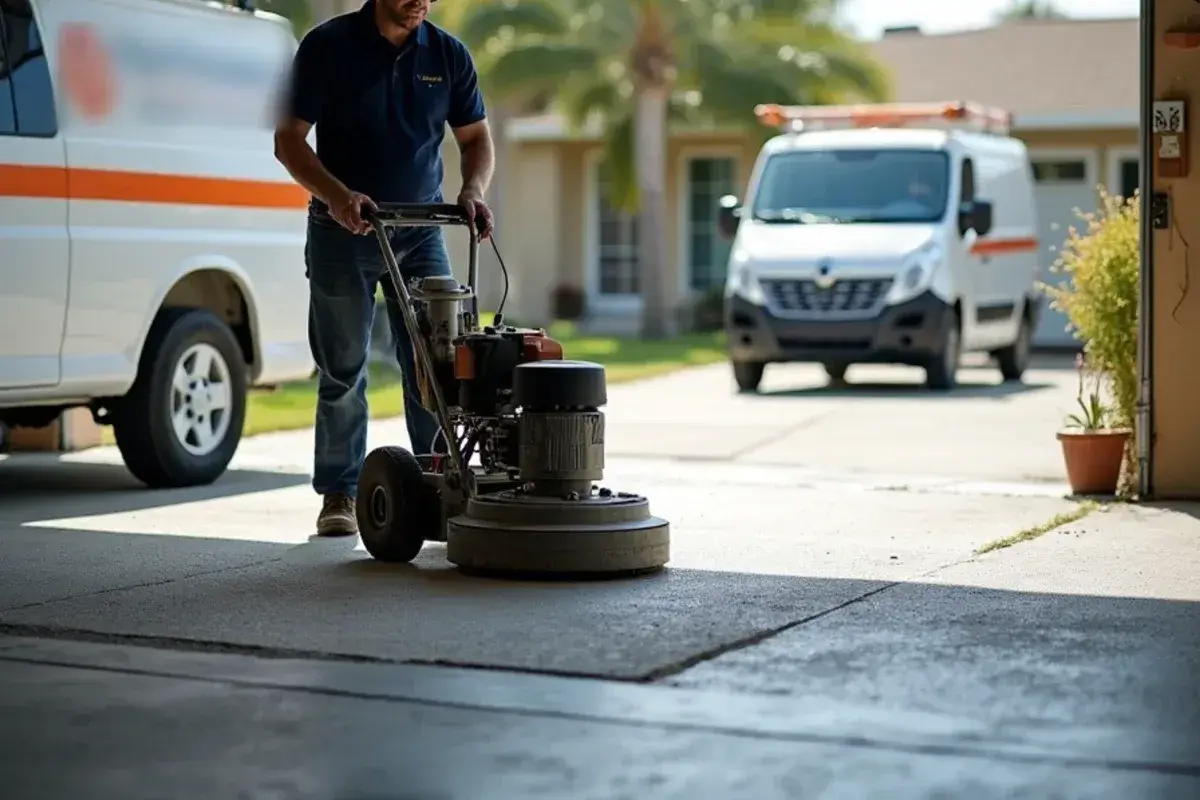
Big garages magnify the problem. Oakleaf Plantation was built mostly after 2003, and many homes there have two- and three-car garages. A three-car slab is a lot of floor for one person to prep, mix and roll inside a short pot life. Kits often go on thin toward the end.
The repair is rarely a patch. Our epoxy floor repair process grinds off every failed area, and usually the whole coating, because the parts that look fine shared the same weak bond. Then we repair cracks, test the slab and recoat. There are honest trade-offs here:
- Spot repair versus full removal. A spot repair is cheaper, but if the original prep was weak everywhere, more spots follow.
- Same chemistry versus a new system. Recoating with another thin kit repeats the failure. A ground slab with a base coat, flake and clear topcoat costs more but resists tires and stains.
- Speed versus cure. Parking sooner is tempting. Fast-curing topcoats shorten the wait, but every product still has a minimum before tires go on it.
If you are starting fresh rather than repairing, our garage floor epoxy page walks through a full system from grinding to topcoat.
Frequently asked questions
Can I roll new epoxy over my peeling DIY coating?
No. A new coat can only hold as well as the layer under it, and a peeling film is already letting go of the slab. Recoating traps the weak bond under fresh material, and it lets go again, often within a season. Grind the failed coating off down to sound concrete, repair the slab, then recoat with a system rated for vehicle traffic.
Why did my new coating bubble the day after I rolled it?
Usually because the slab was warming while the coating cured. Concrete holds air and moisture, and as it heats it pushes them up into the wet film. Sika's data sheet for its Sikafloor-261 epoxy says not to apply while ambient and substrate temperatures are rising, because pinholes may occur. In a Florida garage, that rules out the late-morning warm-up.
Is acid etching enough prep for a garage floor coating?
No, not for a thick vehicle-rated system. Graco's concrete prep guide describes acid etching as a way to lightly roughen a surface for a sealer, primer or other thin coating. Higher-build epoxy floors are specified on mechanically prepared concrete; Sika lists ICRI CSP 3 to 4 for its Sikafloor-261. That profile comes from diamond grinding or shot blasting, not acid.
How long should a new garage coating cure before I park on it?
As long as its data sheet says, at the temperature in your garage. Sika lists its Sikafloor-261 epoxy at about seven days to full cure at 68°F and about five days at 86°F. Parking too early is a classic cause of hot-tire marks, because the film has not reached full hardness. Ask your installer which product went down and follow that sheet.
The bottom line
DIY garage coatings in Florida rarely fail because of one bad product. They peel because the bond was weak from the start, and heat, humidity, slab moisture and hot tires find that weakness. Read where your floor is failing, remove what is loose, prepare the concrete properly and give the coating time to cure.
If your garage floor is lifting, flaking or bubbling, call (904) 533-7260. We will look at how it failed and give you a written plan to fix it.
Related
Services and areas from this article
Talk to a Jacksonville floor crew
Questions about your own floor after reading this? Call (904) 533-7260 and describe what you're seeing.
JW Painting & Pressure Washing & Epoxy Flooring · Jacksonville, FL 32254 · (904) 533-7260
Mon–Sat 7am–8pm · Sun closed