Emergency
Water Under Your Floors After a Jacksonville Storm: What to Do in the First 48 Hours

By Jimmie Wilson, owner of JW Painting & Pressure Washing & Epoxy Flooring
More than 30 years of hands-on painting and finishing experience
Published · Updated
- 5.0 on Google · 82 reviews
- Based in Jacksonville, FL 32254
- Where Precision Meets Perfection
Short answer
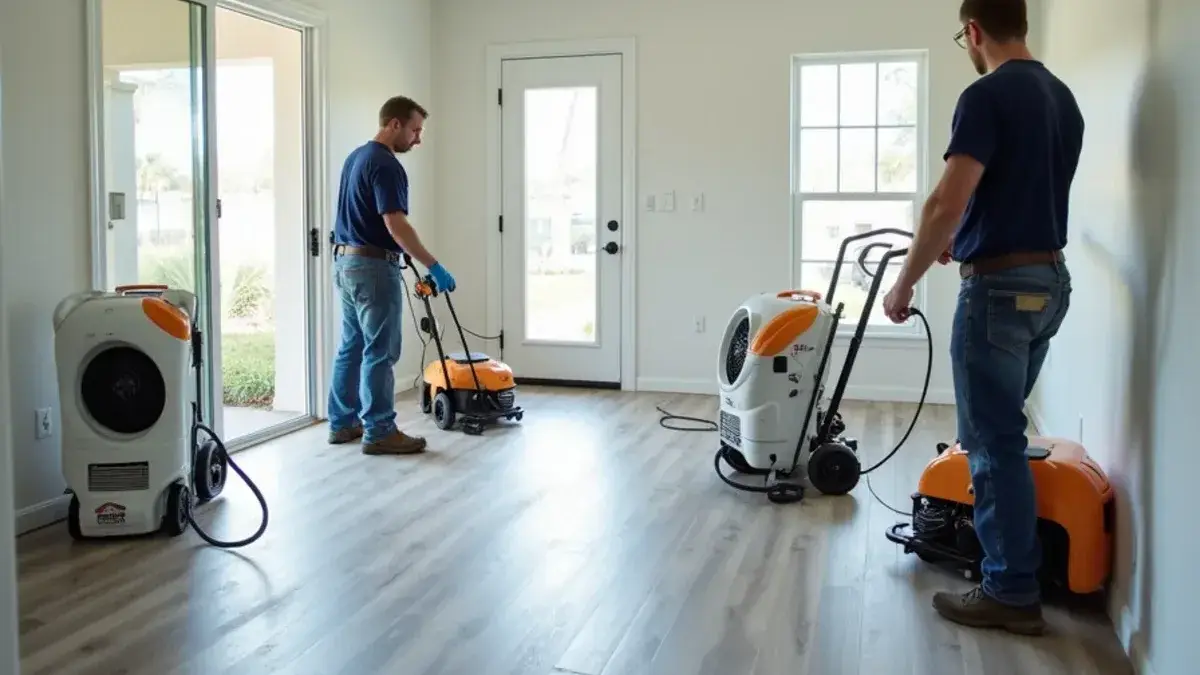
Make the house safe, then photograph everything before you move it. Report the loss to your insurer, get standing water out and start drying. The EPA says wet materials should be dried within 24 to 48 hours to prevent mold. Leave the flooring decision until the slab or subfloor has been checked.
Storm water rarely stays where you can see it. It runs under baseboards, spreads across the slab and sits beneath a floor that looks almost normal from above. What you do in the first two days decides whether you are drying a floor or replacing one, and it shapes how the insurance claim goes.
This guide walks through those 48 hours in order: safety, documentation, drying, then the floor itself.
Is it safe to go back in?
Start with power. The CDC says that if you can reach the main breaker from a dry spot, switch it off, even if that delays the cleanup. If reaching it means stepping into standing water, call an electrician instead. Do not switch power back on until an electrician has checked the system.
Across most of Duval County, electric service comes from JEA, the city's community-owned utility. At the beaches the provider is different: Beaches Energy Services serves Jacksonville Beach, Neptune Beach and parts of Ponte Vedra. Know which one to call before a storm.
Treat floodwater as dirty. The CDC warns that it can carry chemical, electrical and infectious hazards, so wear boots and gloves and wash after contact. If the house sat closed for days, open doors and windows and let it air out before you stay inside to work.

Hours 0 to 24: document, report and stop the spread
Florida's Department of Financial Services tells flood claimants to take photos and video before moving, removing or throwing anything away. Do that first, then work through this list.
- Photograph the water line inside and outside, every room, and the inside of closets and cabinets.
- Report the loss to your insurance company or agent. Ask about an advance payment if the damage is large.
- Get standing water out with a wet vacuum or pump, working from the lowest room outward.
- Pull wet rugs, pads and carpet, keeping a small sample of each for the adjuster.
- Move furniture off wet floors and put foil or blocks under legs that must stay.
- Open the house up when the air outside is drier than inside, and run the AC once power is safe.
- Write down what you did and when. Policies expect you to take reasonable steps to prevent further damage.
The same state guide adds a warning worth repeating: talk to your adjuster or insurance company before you sign a contract with a cleaning or remediation company.
Hours 24 to 48: why drying speed matters
The EPA's mold guidance says water-damaged materials and areas should be dried within 24 to 48 hours to prevent mold growth. Porous materials that do grow mold, such as carpet, may have to be thrown out because mold grows inside them.
Professional drying follows IICRC S500, the industry standard for water-damage restoration. It sorts water into Category 1 (clean), 2 (gray) and 3 (black). The standard lists seawater flooding and rising water from rivers or streams among its Category 3 examples. In February 2026, the S500 consensus body added that wind-driven rain and other weather-related water are not automatically Category 3. The restorer has to inspect and decide.
That distinction matters for floors. Clean water from a roof leak may let a floor be dried in place. Grossly contaminated water usually means porous flooring and padding come out.
Drying is a restoration job, not a flooring job. A restorer sets air movers and dehumidifiers and tracks readings. The flooring decision comes after, once the slab or subfloor is close to dry.
How each floor type reacts to storm water
Not every floor fails the same way. Here is what to expect from the floors common in Northeast Florida homes.
| Floor | What water does | Usual outcome |
|---|---|---|
| Floating LVP | Planks shed water, but it pools on the slab and in the foam pad | Lift rows to dry; reuse only if planks stay flat |
| Laminate | The fiberboard core swells at the edges and stays swollen | Usually replaced |
| Solid hardwood | Boards cup within days, then can crown or buckle | Dry slowly first; some floors flatten enough to sand |
| Engineered wood | Moves less than solid, but the core can delaminate | Depends on soak time and core type |
| Tile on a slab | Tile and thin-set resist flood damage | Clean and dry; watch for loose tiles later |
| Carpet and pad | Holds water against the slab | Discard if floodwater soaked it |
FEMA's Technical Bulletin 2 lists ceramic tile, vinyl and concrete among flood damage-resistant flooring materials. Standard wood used as finish flooring is not on that list. That is why tile on a slab is often the floor that survives.
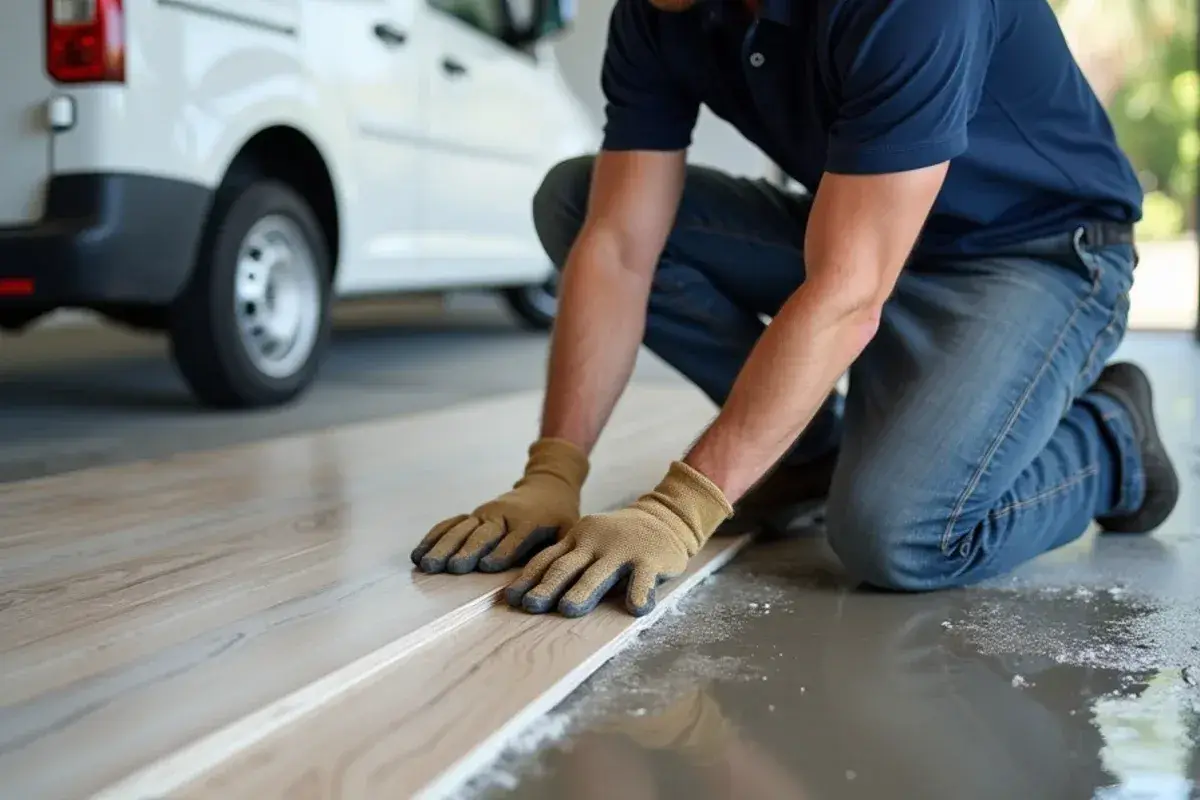
If a wood floor is already cupping or a vinyl floor has started to peak, our buckled floor repair page explains how the moisture source is found before anything is cut out.
What we see on the job after Jacksonville storms
The most common surprise is floating vinyl plank that looks fine on top. The planks are waterproof, so homeowners mop the surface and move on. Underneath, the foam pad and the slab can stay wet for weeks, because the floor itself blocks evaporation. We pull a few rows near the wettest wall before deciding anything.
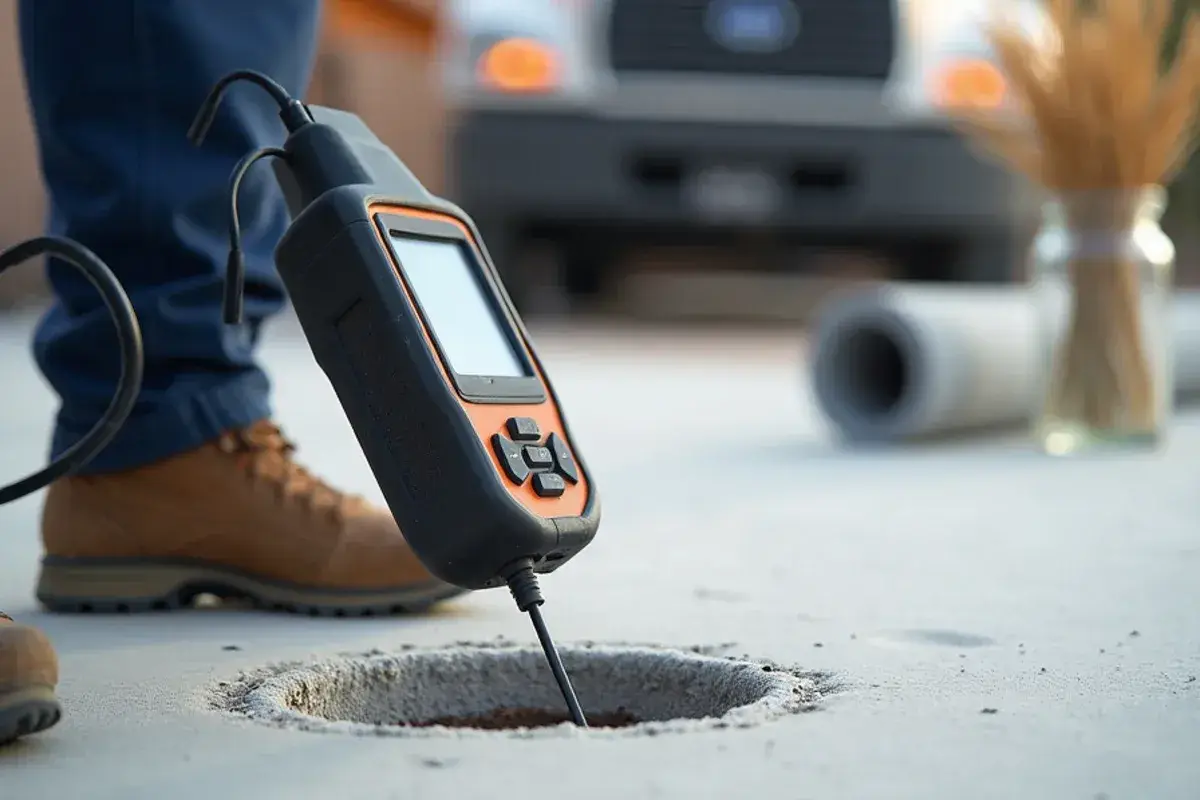
The second is a slab that reads dry on the surface but not inside. Under ASTM F2170, in-situ probes measure relative humidity within the concrete, which tells more than a surface reading. We test before quoting a replacement floor. A new floor over a wet slab can repeat the failure.
Wood floors need patience. NWFA installation guidelines call for checking both the wood and the subfloor for moisture before work. Sanding a cupped floor too early can leave it crowned and thin once it finishes drying. Waiting a few weeks for readings to settle is often cheaper than replacing it twice.
Tile has its own delay. Tile over a slab can pass the first walkthrough and then loosen weeks or months after drying, as the tile and concrete move by different amounts. If tiles start to sound hollow or lift, our water-damaged floor replacement service covers partial and full replacement.
Near the ocean, as at Jacksonville Beach, saltwater intrusion changes the plan. Seawater flooding is one of the S500 Category 3 examples, so padding, carpet and laminate rarely stay.
The history here is real. During Hurricane Irma in 2017, the National Weather Service said surge flooding downtown beat the 1965 Hurricane Dora record by at least a foot. Hurricane season runs June 1 to November 30, so the next storm is a matter of when.
What to have ready when you call a flooring contractor
A clear picture saves a second visit. Gather these before anyone comes out.
Checklist
- Your photos and video, with the water line visible
- The date and time water entered, and whether it came from above or rose from outside
- Your claim number and adjuster's contact details, if assigned
- Any drying logs or moisture readings from the restoration company
- A sample of the existing flooring and pad
- Flooring in undamaged rooms you want to match, with any box labels left over
- The age of the home, so older vinyl can be tested for asbestos as the EPA advises
Frequently asked questions
Can I dry out wet LVP and click it back down?
Yes, sometimes, if the water was clean and the planks were lifted quickly. Rigid planks often survive, but water trapped on the slab underneath will not dry with the floor in place. After a storm, we pull a few rows, test the slab and only reuse planks that stayed flat with locking edges intact. Planks soaked by outside floodwater are usually not worth the risk.
How long does a slab need to dry before new flooring goes down?
There is no fixed number of days. It depends on how long the water sat, the weather and the airflow in the house. The reliable answer comes from testing: ASTM F2170 uses in-situ probes to read relative humidity inside the concrete, and each flooring maker publishes its own limit. We test before quoting the new floor, not after.
Should I pull up wet carpet myself?
Yes, if it is safe and you have photographed it first. The CDC advises throwing out carpet and pad that floodwater or sewage has soaked. Cut a small sample to keep for the adjuster, as Florida's Department of Financial Services suggests, then get the rest out of the house so the slab underneath can start drying.
Will homeowners insurance pay for floors ruined by storm flooding?
No, not usually, when the water rose from outside. Standard homeowners policies generally exclude flood, which is covered by a separate NFIP or private flood policy. Rain that entered through a storm-damaged roof or window is a separate question, so ask your agent. Our guide to insurance and water-damaged floors explains the difference.
The bottom line
The first 48 hours are about safety, photos and getting water out, not about picking a new floor. Dry first, test the slab or subfloor, then decide whether the floor can be saved. That order protects your health, your claim and the next floor.
When the drying is done and you need a real answer about the flooring, call (904) 533-7260. We measure, moisture-test and put the scope and price in writing.
Related
Services and areas from this article
Talk to a Jacksonville floor crew
Questions about your own floor after reading this? Call (904) 533-7260 and describe what you're seeing.
JW Painting & Pressure Washing & Epoxy Flooring · Jacksonville, FL 32254 · (904) 533-7260
Mon–Sat 7am–8pm · Sun closed