Prevention
Pool Deck and Lanai Coating Care: Cleaning, Resealing and Slip Resistance

By Jimmie Wilson, owner of JW Painting & Pressure Washing & Epoxy Flooring
More than 30 years of hands-on painting and finishing experience
Published · Updated
- 5.0 on Google · 82 reviews
- Based in Jacksonville, FL 32254
- Where Precision Meets Perfection
Short answer
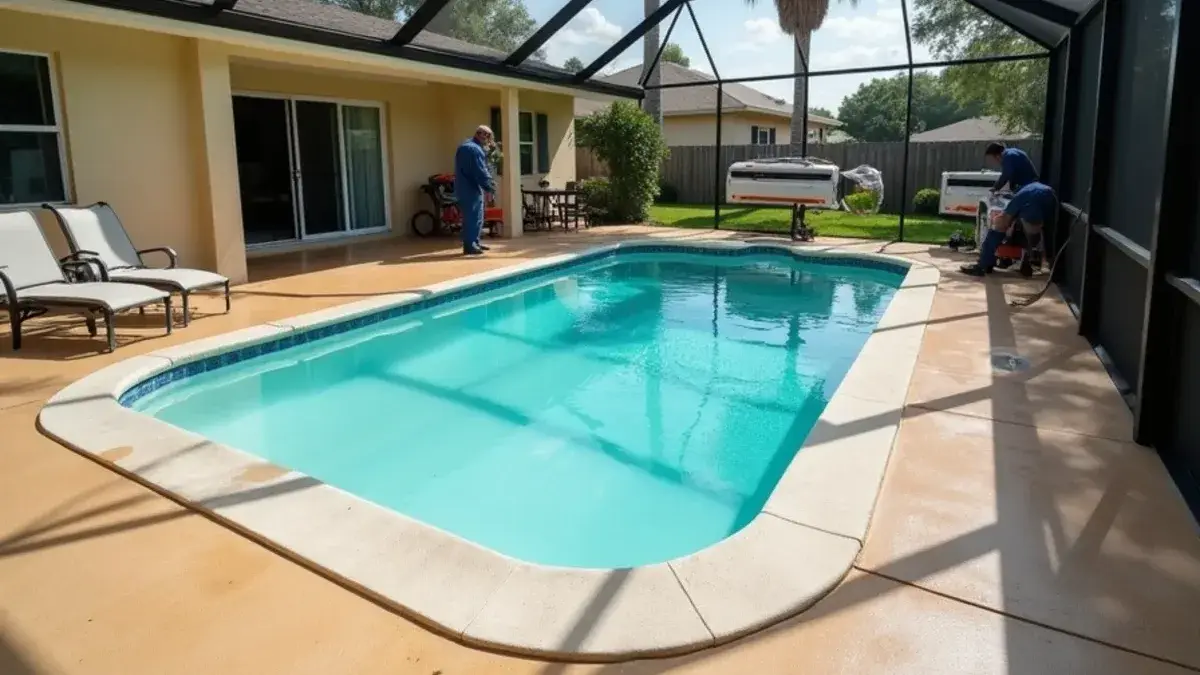
Rinse a coated pool deck often, wash it with a mild cleaner every month or two, and treat mildew before it stains. Keep pool chemicals and salt crystals off the surface. Reseal when water stops beading, color chalks or the texture wears smooth, and ask for grit in the topcoat so it stays grippy when wet.
A pool deck in Northeast Florida takes a beating that an indoor floor never sees. Sun bakes it, summer storms soak it, chlorinated water splashes it every day, and the humidity gives mildew a head start. A good coating handles all of that, but only if someone looks after it.
This guide covers the routine that keeps a coated deck or lanai clean, sealed and safe underfoot. It also covers the signs that a recoat is due and the trade-offs between the common systems.
What kind of coating is on your deck?
Care starts with knowing what you are cleaning. Most coated decks around here fall into one of three groups.
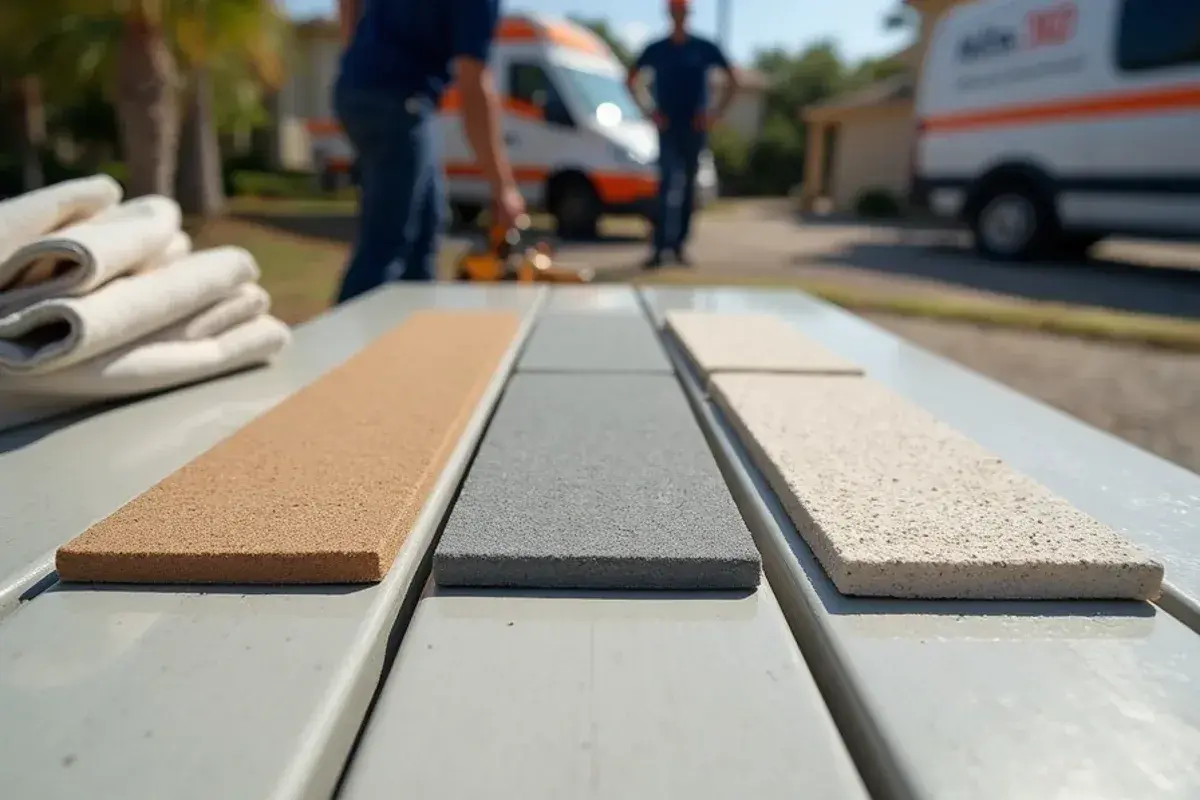
| Surface | What it is | Care notes |
|---|---|---|
| Acrylic texture coating | A sprayed or troweled knockdown texture over concrete, often light-colored | Gentle washing; texture can be cut by a close pressure-washer tip |
| Flake epoxy or polyaspartic | A resin base coat with color flakes and a clear topcoat, common on lanais | Mild cleaners; the topcoat takes the wear and gets renewed |
| Sealed pavers or stamped concrete | Pavers or patterned concrete under a clear sealer | Sealer wears first; slip resistance depends on the sealer chosen |
If you are not sure, look at an edge or a chip. A thin colored layer over gray concrete points to a coating. Visible paver joints with a sheen point to a sealer. The original installer's paperwork, if you have it, names the product, and the maker's data sheet lists approved cleaners and recoat windows.
A cleaning routine for Florida humidity
Rainfall in Jacksonville averages around 52 inches a year, and most of it falls from about May through September. That wet, warm stretch is when mildew and algae spread fastest, so the routine should tighten in summer.
- Rinse weekly in summer. A garden hose clears pollen, leaf litter, sunscreen and splash-out before they bake on.
- Wash every month or two. Use a mild, pH-neutral cleaner and a soft-bristle deck brush, then rinse well.
- Treat mildew early. A diluted bleach solution, brushed on and rinsed off, handles most surface mildew. The EPA warns never to mix chlorine bleach with cleaners that contain ammonia.
- Fix the moisture source. The EPA also notes that mold comes back when the moisture causing it stays. Redirect sprinklers, clear gutters on the screen enclosure and trim plants that keep a corner wet.
- Pressure-wash sparingly. Once or twice a year is plenty for most decks, using a wide fan tip or a surface cleaner.
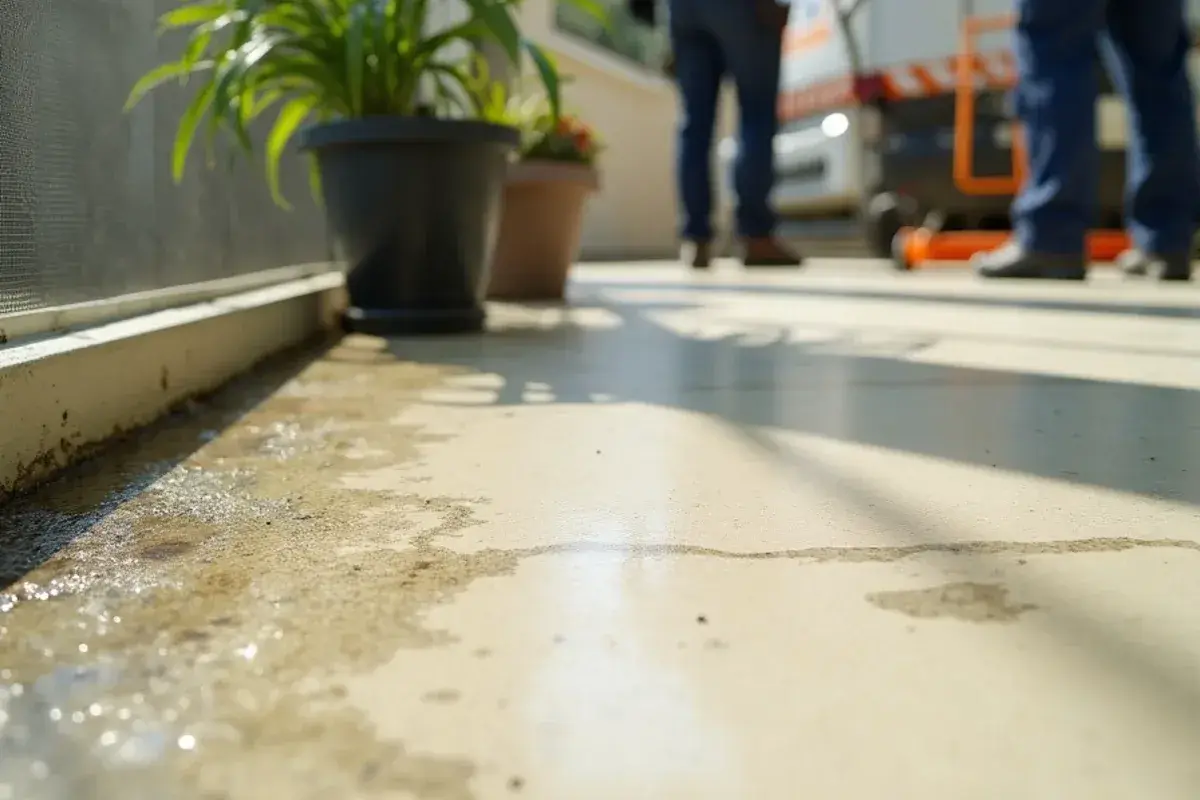
Screened lanais need special attention. The screen roof holds shade and slows drying, so the corners and the strip along the house wall often stay damp for hours after a storm. Those are the first places mildew shows.
Do chlorine and salt systems wear down a coated deck?
Yes, slowly, though usually through neglect rather than the water itself. A salt system makes chlorine by electrolysis of salt dissolved in the pool water. When that water splashes onto the deck and evaporates, it leaves fine salt crystals behind in the texture. Salt is corrosive to some metals and to improperly sealed stone, and a buildup holds moisture in the surface.
The fix is simple: rinse the splash zone with fresh water after a busy weekend, and keep the sealer in good shape. Traditional chlorine pools have their own risk. Granular shock, liquid chlorine and acid used to balance the water can spot or etch a coating if spilled. Mix and pour chemicals away from the deck, and rinse any spill right away.
Keep an eye on pool chemistry as well. Most corrosion problems around salt pools trace back to water that has drifted out of balance, not to the salt level alone.
When is it time to reseal?
No coating lasts forever in full Florida sun. Run through these checks at the start of each spring.
Checklist
- Water soaks in and darkens the surface instead of beading up
- The color looks chalky or faded, especially in full-sun areas
- The texture has worn smooth in walkways, steps and around the ladder
- Edges are chipping or lifting at the pool coping or along cracks
- Hairline cracks have opened through the coating
- Mildew stains return within days of cleaning
One or two of these usually means a fresh topcoat or sealer coat is due. Peeling, lifting or bubbling across larger areas means something is wrong underneath, often moisture or poor adhesion. That calls for a closer look. Our epoxy floor repair page explains how failed coatings are removed before anything new goes down.
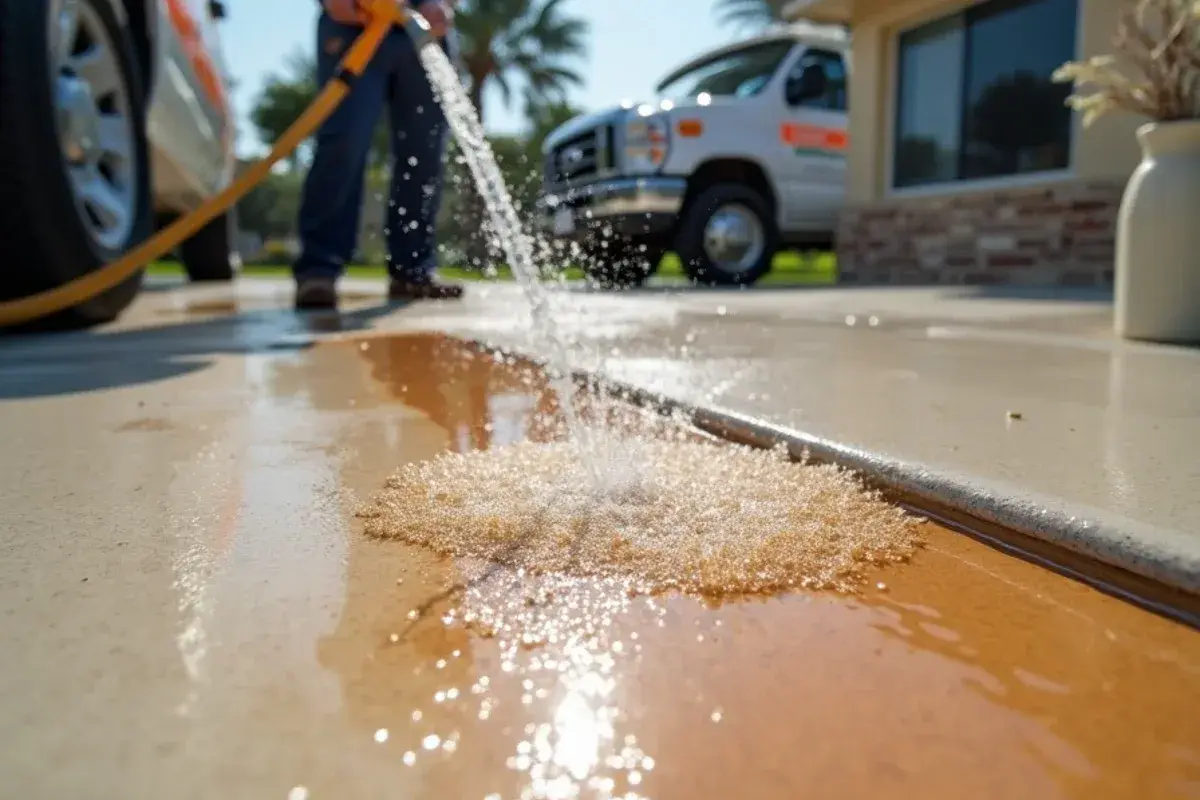
Recoating is more than rolling on another layer. The surface has to be cleaned and often abraded so the new coat can bond. For full systems, the concrete repair industry grades the texture a coating needs on the ICRI concrete surface profile scale. Skipping that prep is the most common reason a recoat peels.
How do you keep a wet deck from getting slick?
Grip comes from texture, and texture wears. ANSI A326.3 is the standard wet test for slip resistance on hard flooring. ANSI A137.1 sets a wet value of at least 0.42 for level interior floors walked on when wet. That number was written for indoor floors, not pool decks, so treat it as a minimum rather than a target outside.
In practice, slip resistance on a deck depends on three things: how much texture the coating has, whether the clear coat is slick, and how worn the traffic lanes are. Anti-slip grit mixed into the final coat restores grip without changing the look much. If your pavers or stamped concrete turned glossy and slick after the last sealing, the sealer is the likely cause. Our page on floor sealing and clear coat covers sealer choices for outdoor concrete and pavers.
Trade-offs we weigh on pool deck and lanai recoats
Every deck involves the same balance between looks, grip, heat and how much upkeep the owner wants.
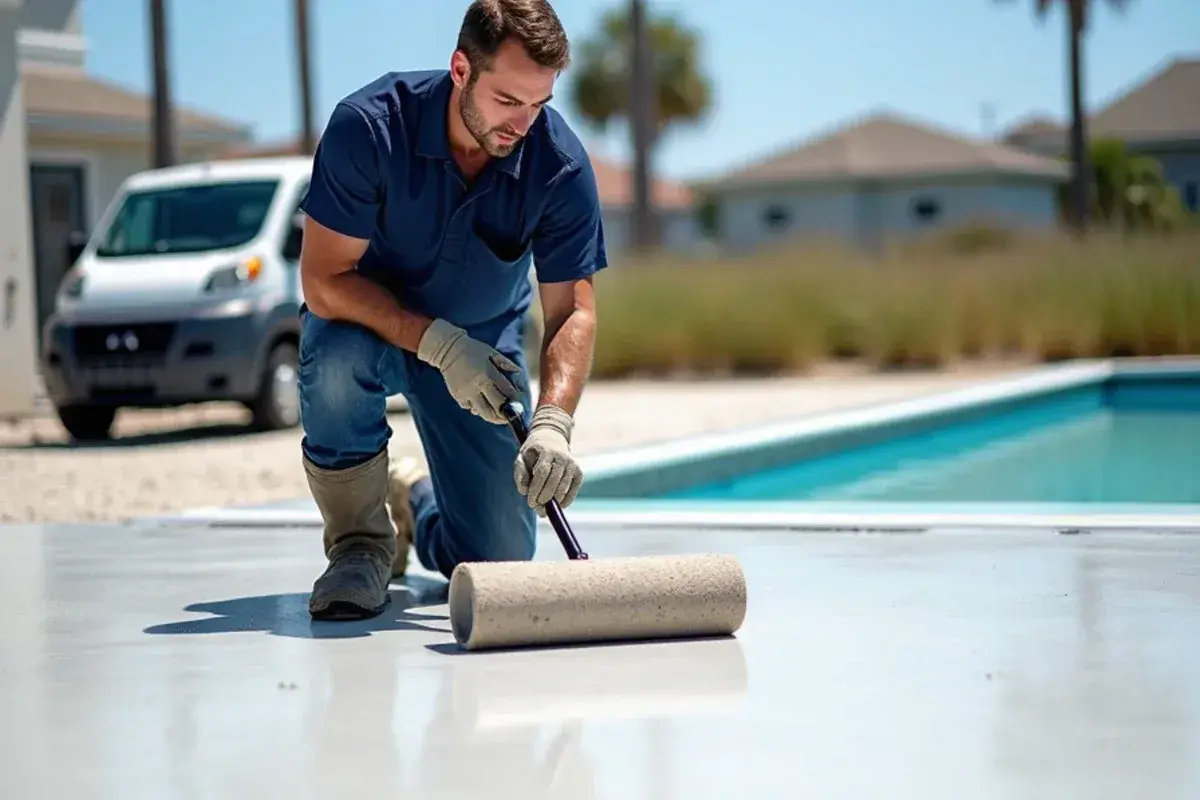
On Fleming Island, many homes in communities such as Eagle Harbor and Fleming Island Plantation have screened lanais, with Doctors Lake, Black Creek or the St. Johns River nearby. Shade and humidity are the main enemies there. A smooth, light topcoat cleans easily but can feel slick. A deeper texture grips better but gives mildew more places to hold on. We usually aim for a middle texture and a mildew-resistant topcoat, then talk honestly about how often it will need washing.
Ponte Vedra Beach sits wholly east of the Intracoastal Waterway, and oceanfront decks there face salt air, blowing sand and full sun. Sand acts like sandpaper on a clear coat, so topcoats in traffic lanes wear faster. Light colors stay cooler under bare feet but show stains sooner. Darker flake blends hide wear but absorb more heat.
A few other trade-offs come up on almost every visit:
- Recoat now or wait. A topcoat renewed before it wears through costs far less effort than stripping a failed system later.
- Cracks. Filling a crack seals it, but a moving crack will often show through again. Saw-cut control joints are better kept as joints.
- Pressure washing. It is the right first step for any recoat, and the prep wash is part of every pool deck and patio coating job we do. For routine cleaning, gentler is better.
Frequently asked questions
How often should a coated pool deck be resealed?
It depends on the product and the sun, so start with the maker's recoat interval for the system on your deck. In practice, watch for the signs: water soaking in instead of beading, chalky color and smooth spots in traffic lanes. An oceanfront deck in full sun often shows them sooner than a shaded screened lanai, which tends to fight mildew instead.
Can I pressure wash a coated pool deck?
Yes, with care. Use a wide fan tip or a surface cleaner, keep the wand moving and stay well back from the surface. A narrow tip held close can cut into acrylic texture or lift a coating at a chipped edge. We pressure-wash every deck before recoating, and that prep wash is far more aggressive than routine cleaning should be.
Does salt water damage a pool deck coating?
Yes, it can over time if salt is left to build up. Salt is corrosive to some metals and to improperly sealed stone, and dried crystals in the texture hold moisture and scuff the surface. Rinse splash zones with fresh water after heavy use, keep the sealer in good shape and keep the pool's chemistry balanced.
Is a clear sealer enough to keep pavers from getting slippery?
No, not on its own. Many clear sealers make pavers and stamped concrete shinier and slicker when wet. Ask for a product rated for pool decks and an anti-slip additive mixed into the final coat. On a deck around a pool where kids run, test a small area with wet bare feet before sealing the whole surface.
Keep the deck on a schedule
Good pool deck coating maintenance is mostly routine: rinse often, wash gently, stop mildew early and keep pool chemicals off the surface. Check each spring for chalking, soaking and smooth traffic lanes, and reseal before the coating wears through. Ask for grit in the topcoat so the deck stays safe when wet.
If your deck or lanai is stained, slick or starting to peel, call (904) 533-7260. We pressure-wash it, check the coating and the cracks, and give you the scope in writing.
Related
Services and areas from this article
Talk to a Jacksonville floor crew
Questions about your own floor after reading this? Call (904) 533-7260 and describe what you're seeing.
JW Painting & Pressure Washing & Epoxy Flooring · Jacksonville, FL 32254 · (904) 533-7260
Mon–Sat 7am–8pm · Sun closed