Local
Flooring in St. Augustine's Historic Homes: Heart Pine, Coquina and Old Slabs

By Jimmie Wilson, owner of JW Painting & Pressure Washing & Epoxy Flooring
More than 30 years of hands-on painting and finishing experience
Published · Updated
- 5.0 on Google · 82 reviews
- Based in Jacksonville, FL 32254
- Where Precision Meets Perfection
Short answer
Start by finding out what you have. Original heart pine is usually worth refinishing, not replacing. Coquina is porous shell stone, so floors and sealers near it should not trap moisture. Old slabs need a moisture test before anything is glued down. In the city's historic districts, check with preservation staff before work that goes beyond interior finishes.
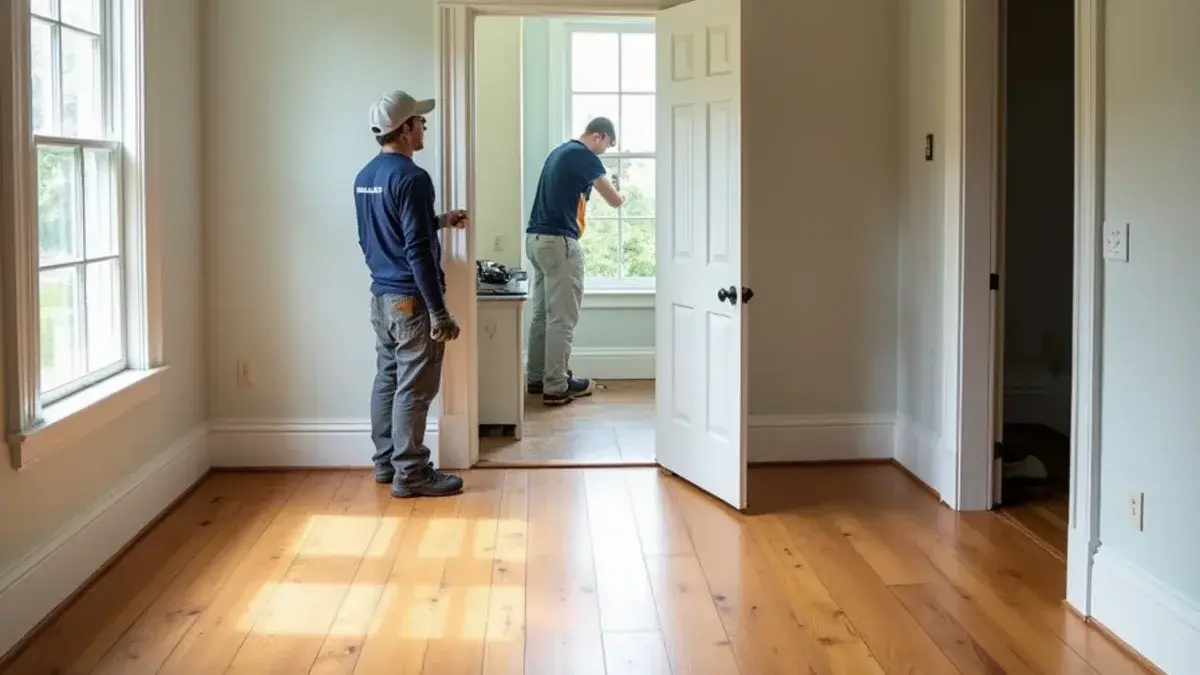
Old houses carry their history in the floor. In a home inside St. Augustine's historic districts, that can mean heart pine boards laid generations ago, walls of shell stone, and a later addition on a concrete slab. Each needs a different approach, and the wrong one can cost you a floor you cannot buy again.
What is under the floor in an old St. Augustine house?
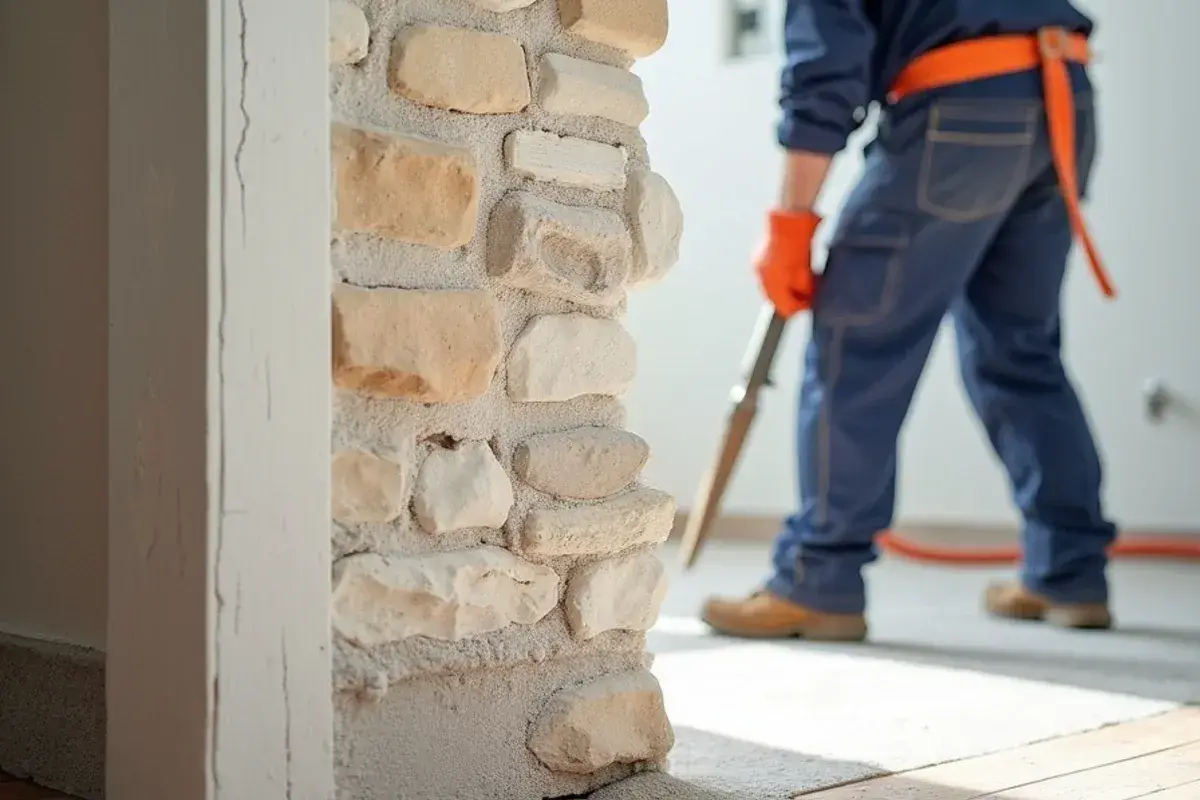
The city was founded in 1565, and its oldest buildings used what the coast offered. Coquina is a soft, porous rock made of shell fragments, mostly the mineral calcite. The Spanish quarried it on Anastasia Island for the Castillo de San Marcos, and it went into houses, property walls and city gates too.
Heart pine is the other local signature. It is the heartwood of longleaf pine, a tree that takes 100 to 150 years to reach full size. Longleaf forests once covered as much as 90 million acres of the South and fell to roughly 5 percent of that range by the 1990s. Old-growth boards are scarce now, and a salvage trade reclaims them from demolished buildings.
Then there are the slabs. Some historic houses gained kitchens, baths or rear rooms on concrete in later decades, and many newer homes nearby sit entirely on slabs. Those floors behave nothing like the wood in the front rooms.
Should you refinish heart pine or replace it?
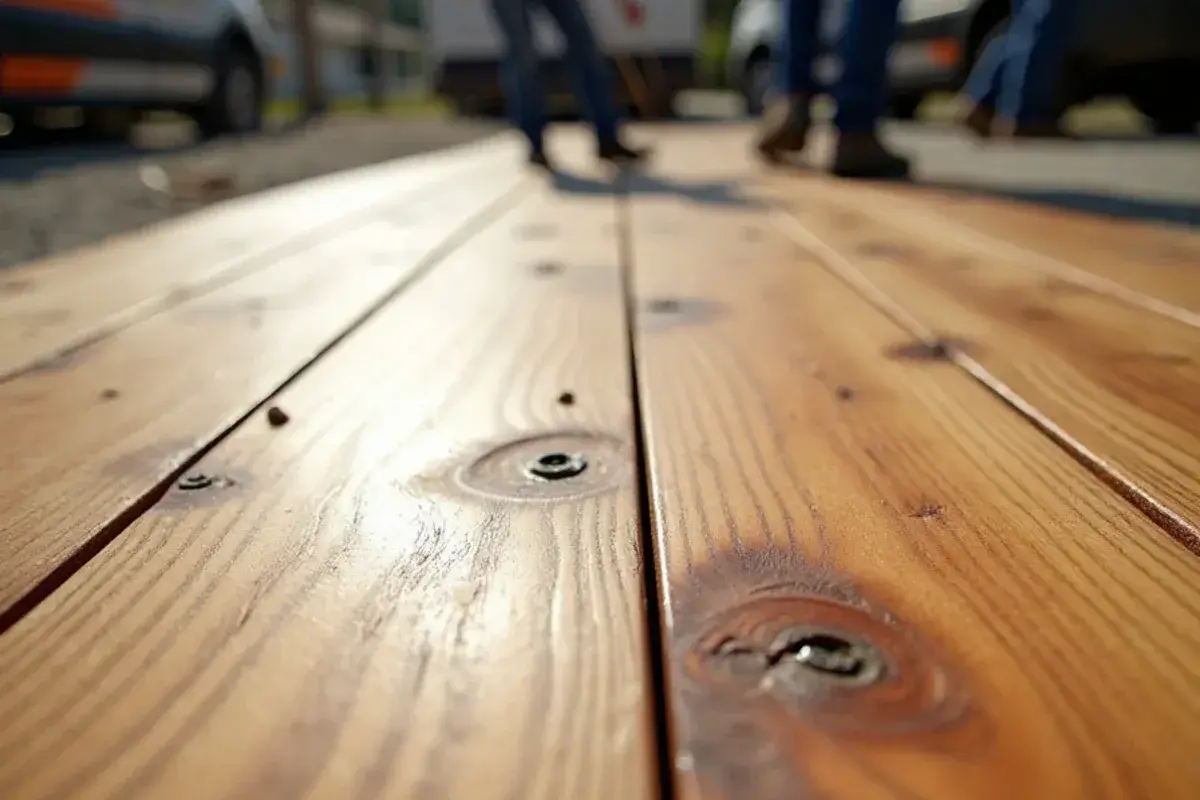
If the boards are sound, refinishing almost always wins. Dense, resin-rich old-growth wood is hard to match with new lumber, and reclaimed boards for patches are limited. Our hardwood and laminate flooring page explains how we measure the wood left above the tongue before deciding whether a floor can take another sanding.
Before any sander touches the floor, find out what is on it. Old floors often carry paint, varnish layers or adhesive from a later covering.
- Paint. EPA's Renovation, Repair and Painting Rule applies to paid work that disturbs paint in homes built before 1978. Firms doing that work must be EPA-certified and follow lead-safe practices.
- Old vinyl and mastic. The EPA says older vinyl tiles, sheet vinyl backing and some adhesives may contain asbestos. Leave them alone, or have them tested before sanding, scraping or removal.
- Patches and repairs. The NWFA's installation guidelines call for checking the moisture of the wood and the subfloor and acclimating boards to in-use conditions. That matters most when old and new boards meet.
How do coquina and old masonry change the floor plan?
Porous stone moves moisture. Historically, coquina was protected with lime plaster, and that breathing finish still matters inside. A wood floor tight against a damp coquina wall, or an impermeable coating spread over masonry, can hold water where it does the most harm.
Calcite is also soft, rating 3 on the Mohs scale, and acids attack it. That rules out acidic cleaners on coquina, shell-rich stone or old lime-based surfaces. Clean with mild, pH-neutral products and test any sealer in a hidden spot first.
For concrete, pavers and later masonry floors, a clear protective coat can make sense. Our floor sealing and clear coat page covers the options, and the main question in an old house is whether the surface underneath needs to keep breathing.
Old slabs: test before you glue
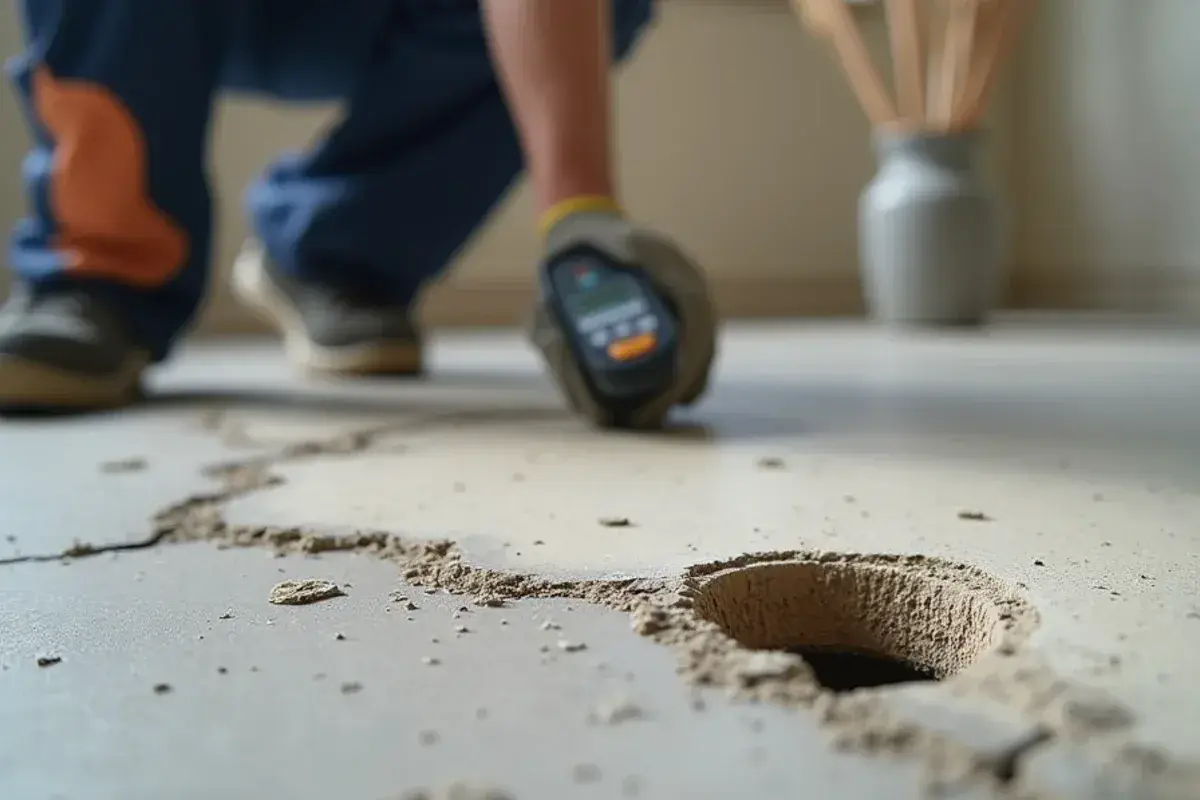
Older slabs can hold more moisture than the floor above can tolerate. You cannot see that from the surface, so the slab gets tested first. Here is the order we follow on a slab in an old house:
- Identify what is on the slab. Old tile, sheet vinyl or black adhesive gets tested for asbestos before anyone grinds or scrapes.
- Test the moisture. ASTM F2170 uses probes set inside the concrete to read relative humidity. ASTM F1869, the calcium chloride test, measures vapor coming off the surface.
- Map cracks and level. Settlement cracks and dips get marked, then ground or patched.
- Pick the floor to match the readings. Mortar-set tile over an uncoupling membrane suits a damp or cracked slab. Floating plank over a moisture barrier is another route.
- Write the scope. The quote should state the test results and the prep the slab needs.
Permits, the HARB and flood risk
Florida jurisdictions that adopt the residential code's permit exemptions generally treat tiling, carpeting and similar finish work as exempt, as determined by the building official. Confirm with the local building department.
The historic overlay adds another layer. The city's Historic Architectural Review Board says a Certificate of Appropriateness is required for most work within St. Augustine's five Historic Preservation zoning districts. The board also issues demolition certificates and handles ad valorem tax exemption certificates for qualifying historic properties. If your project touches exterior walls, structure or demolition, ask the city's preservation staff before you plan the floor.
Structural repairs need the right trade. Rotted joists, sills and floor framing fall under Florida's state-certified contractor categories in Chapter 489. Downtown streets also flood in storms like Matthew. FEMA's Technical Bulletin 2 rates solid and engineered wood as unacceptable below flood level, which can shape the choice for ground-floor rooms.
Trade-offs in the field with historic floors
The hardest calls involve partial damage. One water-stained room of heart pine can often be saved by weaving in reclaimed boards. The new wood will not match perfectly until it ages. Replacing the whole floor in one room gives a uniform look and loses original material. We lay out both options and let you decide.
For additions and rooms on slabs, engineered wood is a practical bridge. The NWFA notes that engineered wood moves less than solid wood with humidity changes, which helps in a house where the AC runs unevenly. It will not match heart pine grain, so many owners pick a clearly different floor rather than an imitation.
The same questions come up farther north. In Fernandina Beach, the Centre Street historic district of roughly 50 blocks holds Victorian-era homes with original heart pine. Our crew already works in St. Augustine, where JW painted a two-story home, and the floor approach in both towns starts the same way: test, measure, then decide.
Frequently asked questions
Can old heart pine floors be refinished instead of replaced?
Yes, in many houses. Heart pine came from slow-grown longleaf pine, and old-growth heartwood is dense and resin-rich. If the boards are sound and enough wood remains above the tongue, sanding and a new finish bring it back. We check for loose boards, past sanding, pet damage and old paint before recommending a refinish over a patch or replacement.
Should I check with the city before changing floors in a historic district home?
Yes, it is a short call that can save trouble. St. Augustine's Historic Architectural Review Board says a Certificate of Appropriateness is needed for most work in the city's five Historic Preservation zoning districts. Interior finish flooring is generally permit-exempt in Florida, but work touching structure, exterior walls or demolition is a different matter.
Is it safe to sand an old painted floor?
No, not until you know what is in the paint. EPA's Renovation, Repair and Painting Rule covers paid work that disturbs paint in homes built before 1978. Firms doing it must be EPA-certified and use lead-safe practices. Older vinyl and black adhesive under a painted or covered floor may also contain asbestos and should be tested first.
What flooring works over an old concrete slab in a historic house?
It depends on what the moisture test shows. Mortar-set porcelain tile over an uncoupling membrane handles a damp or cracked slab well. Floating plank or engineered wood can work over a moisture barrier when readings allow. Glue-down products need the slab to fall within the adhesive maker's limits, which an in-situ relative humidity test confirms.
The bottom line
In an old St. Augustine house, save what you can. Refinish sound heart pine, keep coquina and lime-based surfaces able to breathe, and test every slab before anything is glued down. Check paint and old adhesives before sanding or scraping, and call the city's preservation staff when the work reaches past interior finishes.
If you are deciding what to do with an old floor, call (904) 533-7260. We look at what is there, test what is under it and put the options and the price in writing.
Related
Services and areas from this article
Talk to a Jacksonville floor crew
Questions about your own floor after reading this? Call (904) 533-7260 and describe what you're seeing.
JW Painting & Pressure Washing & Epoxy Flooring · Jacksonville, FL 32254 · (904) 533-7260
Mon–Sat 7am–8pm · Sun closed