Local
Salt Air, Sand and Your Floors: Flooring for Jacksonville's Beaches

By Jimmie Wilson, owner of JW Painting & Pressure Washing & Epoxy Flooring
More than 30 years of hands-on painting and finishing experience
Published · Updated
- 5.0 on Google · 82 reviews
- Based in Jacksonville, FL 32254
- Where Precision Meets Perfection
Short answer
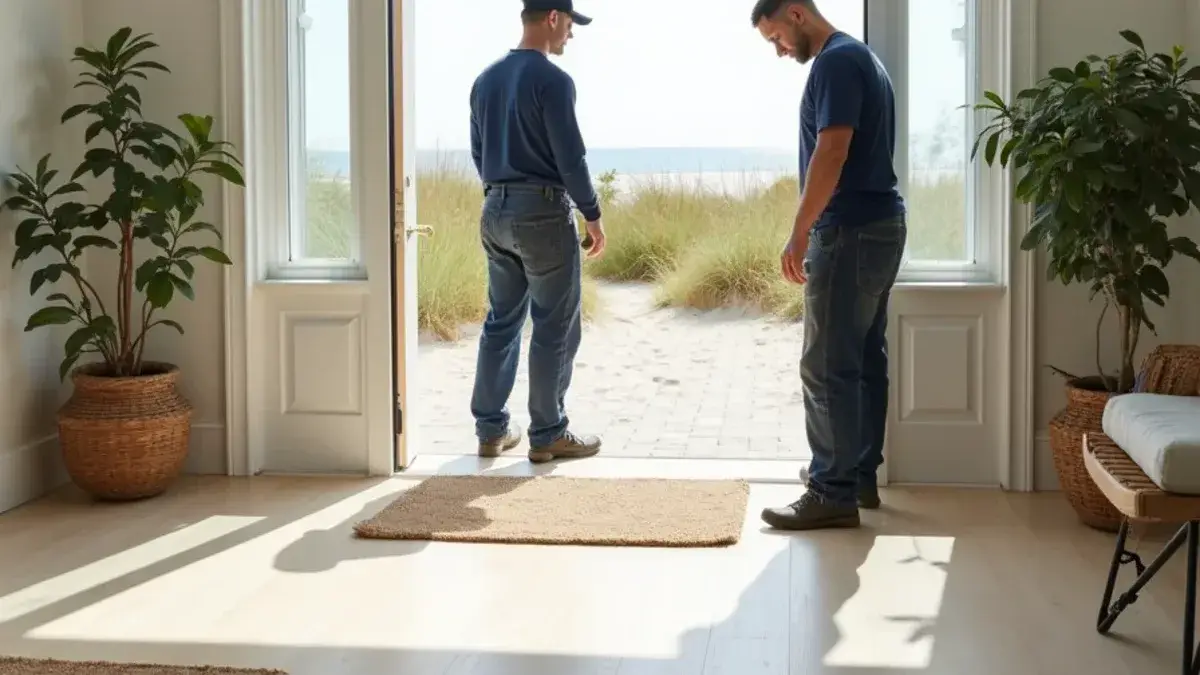
Porcelain tile is the most forgiving floor for a beach home: it absorbs almost no water, sweeps clean of sand and does not swell. Waterproof LVP with a thick wear layer is the warmer, quieter choice for many condos. Outside, pool decks need a slip-resistant coating over clean, repaired concrete.
A house near the ocean asks more of a floor than one inland. Sand comes in on every pair of feet, salt rides in on the air, and wet towels end up on the floor. Condos add a neighbor below and a board with rules. This guide covers what holds up at the beach, what to check before you buy, and where each choice falls short.
Why do floors wear faster at the beach?
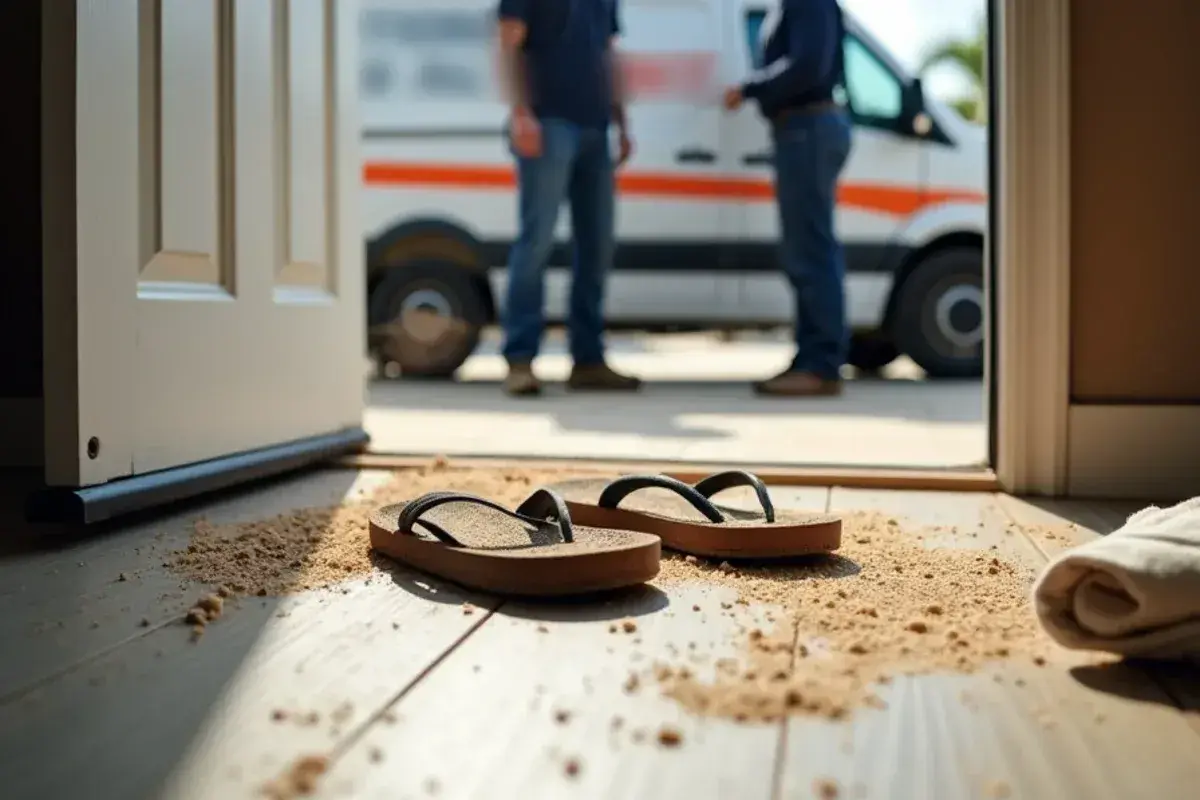
Start with the sand. Away from the tropics, most coastal sand is largely quartz, which rates 7 on the Mohs hardness scale. Grit that hard acts like fine sandpaper under shoes and furniture feet. Wood finishes and vinyl wear layers show it first, as a dull path from the door to the kitchen.
Salt and humidity come next. Salt residue on floors, mats and outdoor concrete pulls moisture from the air, and ocean air holds plenty of it. Floors that swell, like laminate and solid wood, have a harder life within sight of the dunes.
The housing mix shapes the choice, too. In Jacksonville Beach, oceanfront condos sit alongside 1950s to 1970s cottages near 1st and 3rd Streets, where A1A runs as the main corridor. Porcelain tile and waterproof plank have become the default there for good reason.
Porcelain, LVP or something else?
Each common floor has a place in a beach home. The question is which room, and who lives below.
| Floor | Where it shines at the beach | Where it falls short |
|---|---|---|
| Porcelain tile | Entries, baths, kitchens, sunrooms; absorbs under 0.5 percent water | Hard, cold and loud without good underlayment in condos |
| Waterproof LVP | Bedrooms, living areas, condos | Sand scratches the wear layer; needs barrier and expansion gap |
| Original terrazzo | Mid-century ranch homes; refinishes well | Hidden under carpet, often chipped at old walls |
| Laminate | Budget dry rooms away from doors | Swells if water reaches the core or seams |
| Solid or engineered wood | Upper floors with steady AC | Sand, humidity and wet feet work against it |
Porcelain tile. International tile standards define porcelain by its density: water absorption below 0.5 percent. That is why it handles wet feet, pool traffic and a sliding door left open. For rooms walked on wet, ANSI A137.1 sets a wet DCOF of at least 0.42 for level interior floors, so ask for the product's rating. Our tile flooring installation page explains how we level the slab and add crack isolation first.
Tile in a sunroom needs extra joints. The TCNA Handbook's EJ171 method spaces interior movement joints roughly every 20 to 25 feet. Where tile gets direct sun or moisture, that tightens to 8 to 12 feet.
Waterproof LVP. Plank is softer and quieter underfoot, which matters in condos. Choose a thicker wear layer and a textured matte surface, which hides fine scratches better than a high gloss. On concrete, most makers want a moisture barrier, often 6-mil polyethylene, unless the pad includes one.
Terrazzo. Many 1950s and 1960s ranch homes in Neptune Beach still have original terrazzo under wall-to-wall carpet. It is one of the toughest floors a beach house can have, so check under a corner before you plan on covering it.
What do condo associations ask for before you change floors?
Florida's condominium statute, section 718.113, bars a unit owner from doing anything that would hurt the safety or soundness of the common elements. The flooring specifics usually live in each building's declaration and rules: approval steps, work hours, elevator booking and sound-rating minimums.
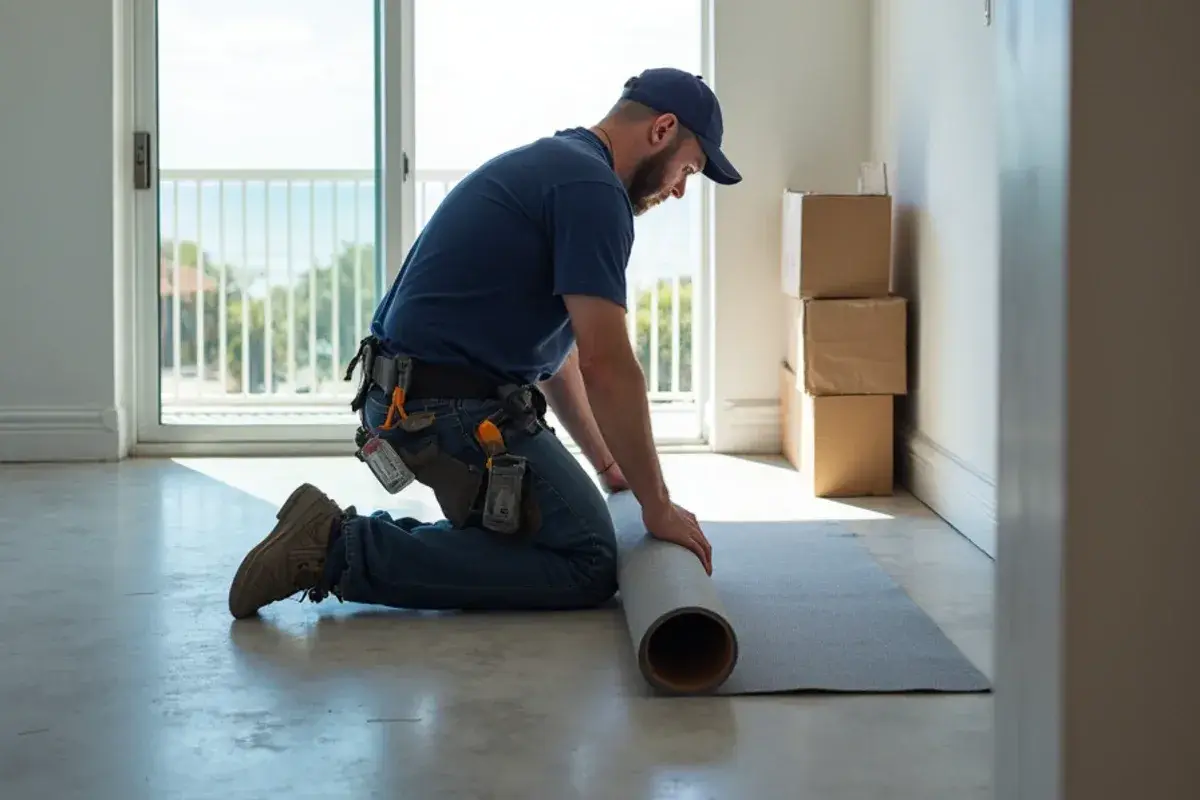
Sound ratings come in two kinds. Impact Insulation Class (IIC) measures footfall noise, and Sound Transmission Class (STC) measures airborne sound like voices. For floor-ceiling assemblies between dwelling units, the 2023 Florida Building Code sets IIC and STC of at least 50 in lab tests. Field tests may show 45 instead, using AIIC and NNIC.
Those numbers belong to a tested assembly: the finish floor, the underlayment, the slab and the ceiling below. A pad's box may quote ratings from one specific lab assembly. Ask the board what rating it requires and how it wants proof, then match the product data to that request.
Checklist
- The association's written flooring rules and approval form
- Any minimum IIC or STC rating, and whether lab or field data counts
- Approved underlayment products, if the board keeps a list
- Allowed work hours, elevator reservations and parking for the crew
- Rules for hauling old flooring out of the building
- Whether the board wants the installer's details before work starts
Pool decks, lanais and the walk in from the sand
Outdoor concrete takes sun, salt, chlorine and bare feet. A coating only lasts as long as its bond, so prep comes first. We pressure-wash the deck, repair cracks and spalls, and profile the surface before any coating goes down.
Slip resistance matters more out here than anywhere inside. The 0.42 DCOF figure in ANSI A137.1 is written for level interior floors. For a pool deck, ask the coating maker what texture or grit it recommends for wet bare feet. Our pool deck and patio coatings page covers the systems and prep.
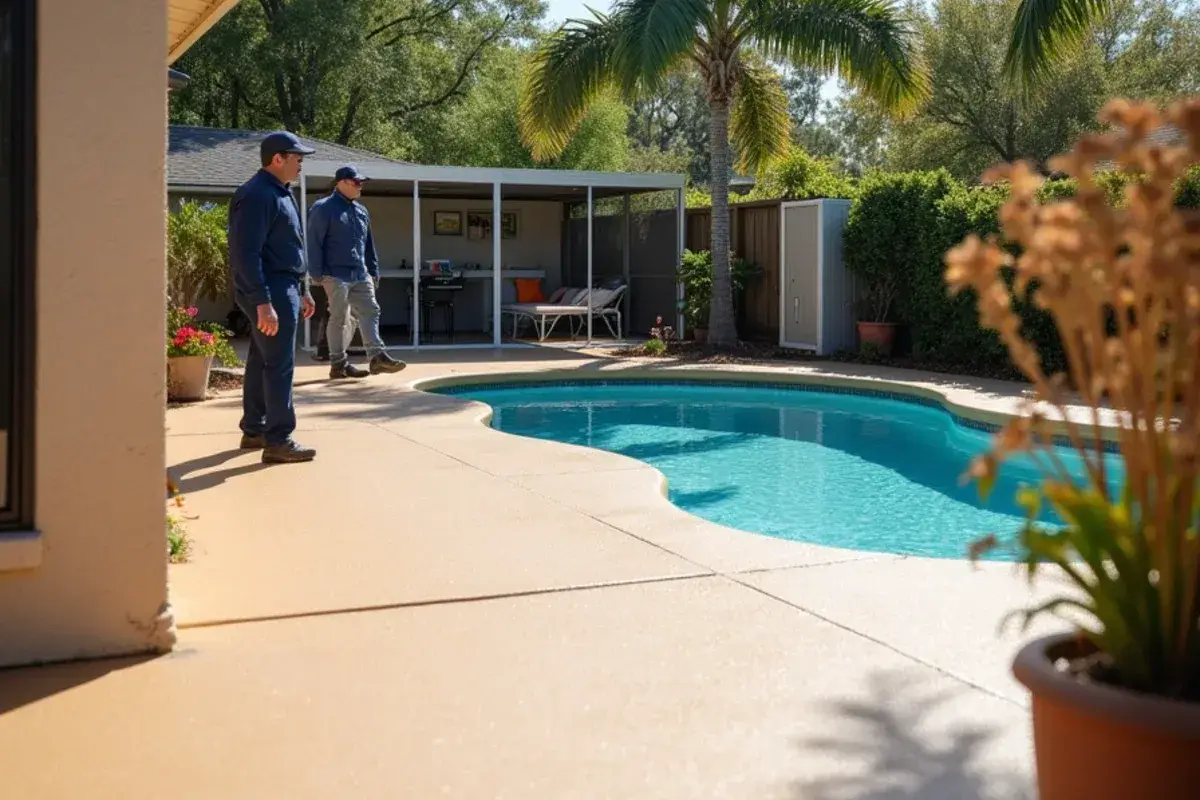
The path from the beach to the door is part of the floor plan. An outdoor rinse spot, a coarse mat outside and an absorbent mat inside stop most sand before it reaches the finish. Coated decks benefit from a regular freshwater rinse to clear salt and grit.
Trade-offs we see on the job in beach homes
Porcelain is the safest bet for water and sand, but it is unforgiving underfoot and noisy for the unit below. In condos, it often needs a rated underlayment and the board's sign-off. Grout lines collect fine sand, so we lean toward larger tiles with narrow joints in entries.
Plank wins on comfort and usually on cost, and it is warmer and quieter underfoot. The price of that comfort is visible wear. A household that walks in straight from the beach every day will see scratches on any vinyl surface sooner than on tile.
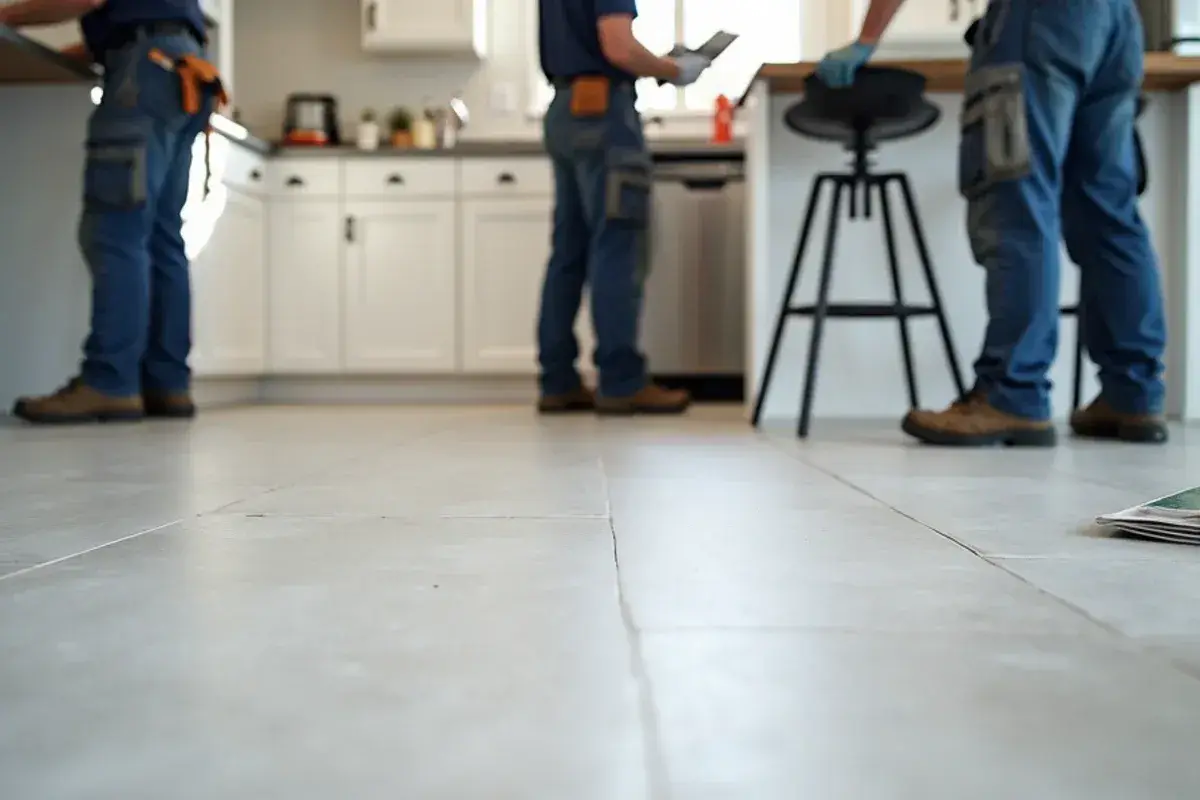
Older cottages hide surprises below the floor. In Old Atlantic Beach and Selva Marina, many older homes have wood subfloors with moisture damage that only shows when the old floor comes up. Near Atlantic Beach, we check the subfloor before quoting tile. Rotted joists or sills are structural work, which Florida assigns to state-certified contractors under Chapter 489.
Frequently asked questions
Is porcelain better than ceramic tile for a beach house?
Yes, in most rooms. International tile standards define porcelain as a dense tile that absorbs less than 0.5 percent water, so it handles wet feet, salt spray and outdoor-adjacent rooms better than softer ceramic. Glaze, color and texture still matter, and we check the product's wet slip rating before it goes into a bath, entry or sunroom.
Can LVP handle the sand at the beach?
Yes, if you choose it and treat it with that in mind. The core does not care about water, but sand scratches the top layer, so pick a plank with a thicker wear layer and a matte, textured finish. Put a scrubbable mat at every door and sweep often. In condos, the underlayment has to meet the association's sound rule, too.
Do I need association approval to change floors in a beach condo?
Yes, assume you do until the documents say otherwise. Florida's condo statute bars owners from work that hurts the safety or soundness of common elements, and each building's declaration and rules set the flooring details. Get the approval process and any sound-rating minimum in writing before you order material or book an install date.
What is the best way to keep sand off the floors?
Stop it at the door. A rinse spot for feet and gear outside, a coarse mat outdoors and an absorbent mat inside catch most grit before it reaches the floor. After that, sweep or vacuum before you mop, because a wet mop drags sand across the finish. On coated pool decks, rinse off salt and sand regularly.
The bottom line
At the beach, pick floors by room. Porcelain belongs at entries, baths and sunrooms. Waterproof plank suits bedrooms and condos where comfort and sound matter. Original terrazzo is worth uncovering. Coated concrete with real texture handles the pool deck. Then stop the sand at the door, and get any condo rules in writing before you buy.
If you are planning floors for a beach cottage or a condo, call (904) 533-7260. We measure, check what is underneath and put the scope and price in writing.
Talk to a Jacksonville floor crew
Questions about your own floor after reading this? Call (904) 533-7260 and describe what you're seeing.
JW Painting & Pressure Washing & Epoxy Flooring · Jacksonville, FL 32254 · (904) 533-7260
Mon–Sat 7am–8pm · Sun closed